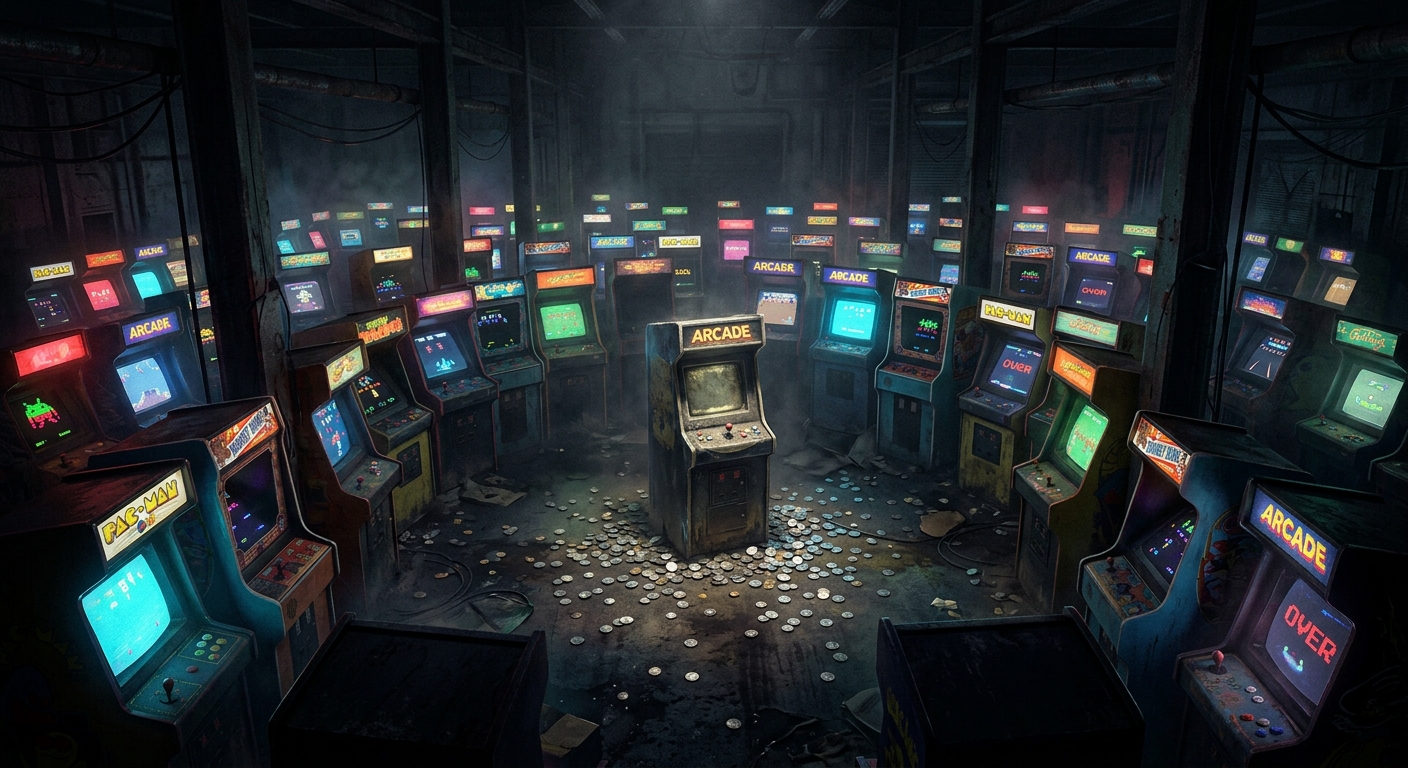
I have spent thirty years watching quarters pile up in cash drawers, and I can tell you exactly what happens when too many machines compete for the same pocket. Players slow down. They pick one cabinet, nurse it, and walk past the others. October 2026 is doing the same thing to console launches, except the cabinets cost sixty dollars each and the players feel personally responsible for the ones they ignore.
The Anatomy of a Release-Date Disaster
Publishers have used October as a staging area since at least the disc era. The logic is sound on paper: get your title into living rooms six weeks before December spending peaks, let word of mouth build, avoid the Christmas blitz. What worked when four or five studios had the same idea stops working when twenty do. The VGC comprehensive release schedule for October through December 2026 makes the density visible in a way that a simple list cannot fully communicate. Tentpole releases, mid-tier breakouts, and ports that spent 2025 in engine-tooling purgatory all converged on the same fortnight. No single gaming budget was engineered for that kind of load.
The structural cause is familiar to anyone who has watched a repair backlog compound. Developers who lost ground to 2025's supply-chain problems all pivoted to the same Q4 safe harbor. Each one calculated that holiday-adjacent sales curves justify the risk of crowding. Each one was correct in isolation. Together, they built a scheduling pileup that no individual studio intended and no platform holder stopped.
How Broketober Became the Internet's Shorthand for Fiscal Suffering
The term crystallized in the early 2020s when forum users noticed October routinely drained more household discretionary income than any month outside December. It spread because it named something everyone felt but no press release would acknowledge. Finance writers ignored it. Publishers certainly ignored it. Gamers put it on T-shirts.
What made the original Broketober seasons survivable was spacing. Five or six major titles in a single month still staggered across different weeks. A paycheck arrived between purchases. You had the practical relief of choice, even if the choice was painful. The Game Informer 2026 release schedule shows titles in the weight class that GTA VI's marketing shadow has defined occupying overlapping launch windows, which compresses consumer decision-making into near-simultaneous coin-flip territory. There is no second paycheck between these launches. There is barely a weekend.
- Early October: two AAA launches, different genres, same target audience
- Mid-October: a long-delayed port and a multiplayer tentpole, same week
- Late October: the prestige single-player title everyone preordered in spring
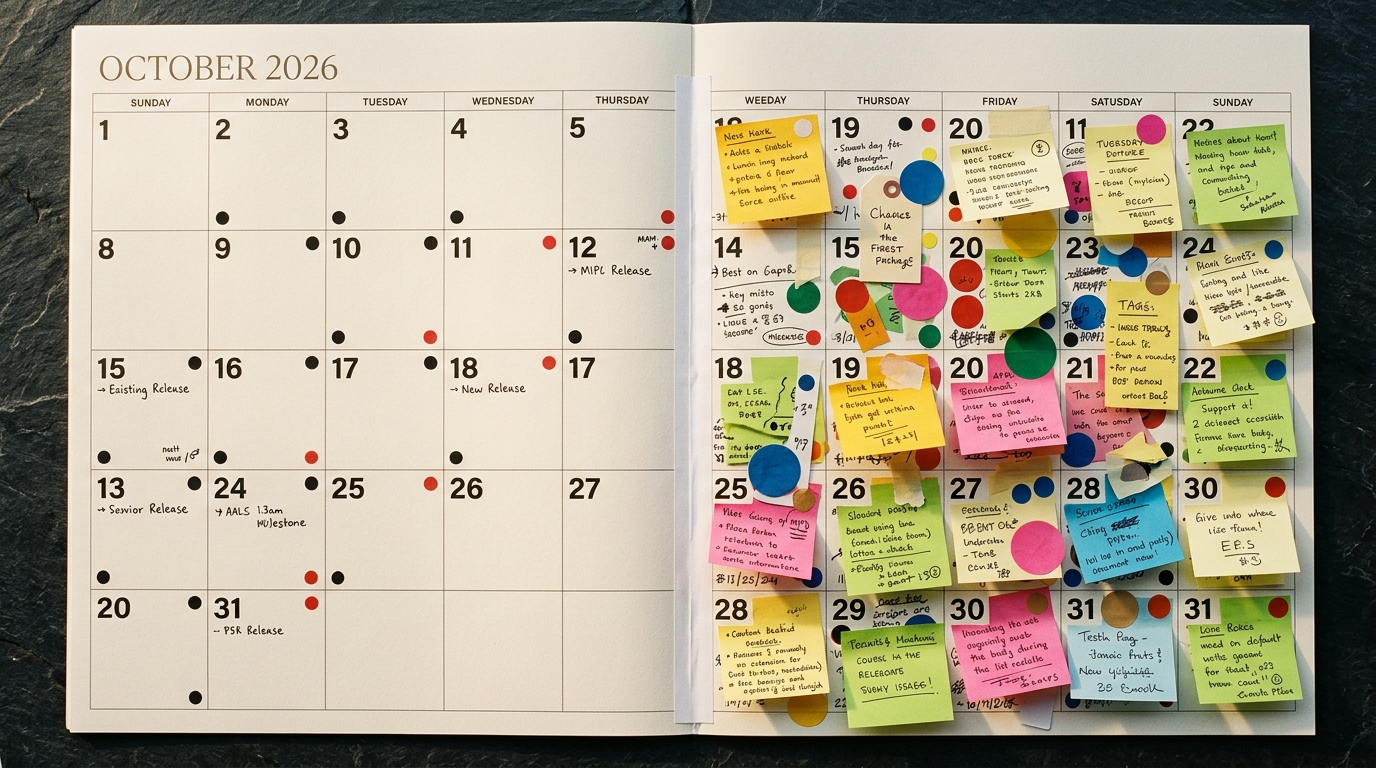
- Early November already visible on the horizon, giving buyers no comfortable clearing period
- Sales data from each launch window feeding publisher panic about the next one
- Post-mortem conversations starting before some titles have even shipped their day-one patches
The Player Experience: Backlog Guilt Meets FOMO Economics
The cruelty of October 2026 is not purely financial. Buying one game at launch means watching discourse, spoilers, and social energy around two or three others peak and partially deflate before you ever load them up. A game purchased three weeks late can already feel like an artifact. Its subreddits are full of endgame discussions. Its streamers have moved on. Its multiplayer lobbies are thinning at the edges.
The cultural half-life of a launch moment has shortened in the streaming era. A title that reviewed well can still feel culturally concluded by the time a responsible, budget-conscious player gets to it. This creates an anxiety that no release-date spreadsheet captures: the sense that even the smart choice to wait is a form of missing out. Every decision in October 2026 carries a hidden penalty. Buy now and overdraft. Wait and arrive to a party that has already moved downstairs.
I once watched a kid at a family arcade spend forty minutes standing between two machines, quarters in both hands, unable to commit. He eventually put his quarters back in his pocket and left. October 2026 is engineering that moment at scale, across millions of players, for sixty dollars a coin.
What Publishers and Platforms Could Have Done Differently
Platform holders have real tools here. Staggered exclusivity windows, timed bonuses, direct financial incentives for studios willing to shift launch dates by two or three weeks. These tools exist. They were deployed sparingly in 2026 despite obvious crowding. The VGC updated October schedule notes that several of the month's releases floated November windows as recently as early summer. The final clustering was reactive, not coordinated. Each publisher bet its title could punch through the noise. Some were wrong.
The long-term cost of that bet is eroded attach rates across the board. When consumers triage, even strong-reviewing games can underperform their commercial potential because they arrived in the wrong week. That dynamic historically triggers executive post-mortems, studio restructuring, and the kind of risk-aversion that makes the following year's calendar bizarrely sparse. Broketober plants the seeds of a barren spring, every time.
Whether October 2026 Moves the Conversation
Industry observers have argued for a more distributed release calendar for years. January through March carries a reputation as a graveyard, but reduced competition can meaningfully boost individual title sales. The data exists. The argument has rarely found traction because Q4 gravity is strong and publisher habits are stubborn.
October 2026 might finally provide the empirical ammunition those arguments need. If post-launch sales data shows multiple high-profile titles underperforming projections despite strong reviews, the case for voluntary redistribution becomes harder to dismiss as idealistic. Publishers respond to numbers. A bad October, documented clearly, is a number.
Until structural incentives change, though, the Q4 gravity well keeps pulling release dates toward the same cramped window. Broketober will remain less a meme and more an annual rite, one that October 2026 has elevated, perhaps permanently, as the benchmark against which future scheduling disasters will be measured. The original Broketober was a slow Tuesday at the rental counter compared to this. I know what a slow Tuesday looks like. This is not it.
Sources
- 2026 Video Game Release Schedule - Game Informer
- Video Game Release Dates 2026: New Games Coming in October, November & December | VGC
- October 2026 Video Game Releases: Full List And Highlights
- October 2026 Game Releases: The Biggest Launches | Fragster
- All October 2026 Game Releases: Full Launch Calendar and Major Highlights - Gaming Amigos
- October 2026 Game Releases: 15 Titles, 2 Weeks
- Games Coming Out in October 2026 | Every Release by Date
- The Sinking City 2 - Wikipedia

Marguerite Osei is a house writer for GamesUnlimited covering classic arcade cabinets, pinball, and the hardware that keeps them running. She spent two decades repairing machines in family arcades before she started writing about them. Her reviews weigh how a game plays against how well it holds up to a thousand quarters.