11:47 a.m. The spreadsheet is open, the coffee is cooling, and a game is one tab away. Click. A short load. The first input lands. That little stretch between “I have a minute” and actually playing is where GamesUnlimited makes its case. No installer asks for disk space. No launcher starts its own update. The tab is the whole doorway.
The promise is measured in seconds
“Just one round,” you tell yourself. With a browser-first library, that can be a reasonable plan. The appeal is not abstract convenience. It is skipping the small chores that can quietly kill a casual session: finding a download button, waiting for a file, checking storage, creating another login, then remembering where the game went.
That matters most when the available time is short or the device is shared. A player on a lunch break may not want a permanent game client on a work computer. Someone using an older laptop may not want to spend its remaining storage on something they might play twice. A direct launch makes trying a game feel more like opening a page than making a purchase of time and attention.
Browser-game guides often point to the same practical draw: open a link, press play, get moving. GamesUnlimited’s format leans into that expectation. The tab also makes it easy to stop. Close it, return to the document, and the session is over. That clean exit is part of the product.
What fits comfortably inside a tab
The format has a natural rhythm. Arcade challenges, puzzles, word games, tower defense, and idle loops can offer a clear objective without asking for a long tutorial or a large world to stream. Their controls often suit a keyboard and mouse. A few clicks or directional inputs are enough to understand what the game wants.
That can make a browser game feel better than its modest scale suggests. Responsive input and a readable screen matter more here than a giant map. A well-timed button press can carry a quick round; a puzzle can make a quiet ten-minute break feel occupied. HTML5 has given browser games room for more visual polish than the old “tiny game in a corner” stereotype allows, though polish varies from title to title.
There is a ceiling, too. A game built around complex asset streaming, a persistent world, or exacting high-speed control has more to ask of the browser and the machine beneath it. The tab can host a satisfying compact experience. It does not make every kind of game equally at home.
Session note: keyboard ready, one window open, no controller connected. That setup suits this library better than a sofa session built around a long campaign. If the game needs a large screen, precise analog movement, or a save that carries a sprawling story across weeks, the convenience of the first click may not compensate for what the format cannot provide.
Free still asks for something
No install does not mean no cost. A free browser library may be supported by advertising, and that changes the tempo of play. A short game can be interrupted by a video or an interstitial that takes a noticeable share of the session. If the break arrives before the first round, the two-click promise begins to feel longer than it looked.
That interruption is especially awkward when the game itself is brief. You came for five minutes. A wait before play, then another break between rounds, can make the actual input time feel like the smallest part of the visit. The test is not simply whether an ad appears. It is whether the placement leaves enough uninterrupted play to justify opening the tab again.
There is also a privacy question worth keeping in view. Not making an account does not necessarily mean a visit leaves no data trail. Advertising and analytics can involve browser data independently of a player profile. That is a general consideration for ad-supported web games, not a claim that every site handles information in the same way. Players who care about it should review the platform’s privacy information and browser settings rather than treating “no sign-up” as “no tracking.”
In practical terms, the trade is attention for access. That can be fair when the game starts quickly and the interruption is brief. It feels less fair when the ad takes longer than the round. The label “free” answers what comes out of your wallet. It does not answer what comes out of your afternoon.
The phone is a tougher test
On a desktop, the browser has room to breathe. On a phone, the same game shares memory and processing time with the browser, background apps, and whatever else the device is doing. Touch controls add another variable. A title that feels immediate with a keyboard can feel loose or delayed when a thumb covers part of the screen and the action depends on a quick response.
Compatibility labels help, but they cannot make every device behave alike. Mobile browsers differ, hardware ages, and a game’s demands vary. A modern phone may handle a casual puzzle cleanly while a timing-heavy arcade game exposes lag. If the first few inputs feel late, that is not a small flaw in a game about reflexes. It changes the game.
There is no native app here to tune specifically for a device, and that is part of the bargain. GamesUnlimited avoids asking for an installation, but it also gives up some of the control a dedicated client can have over rendering and input. For a quick desktop diversion, the compromise is easier to accept. On a mid-range phone, test the controls before settling in.
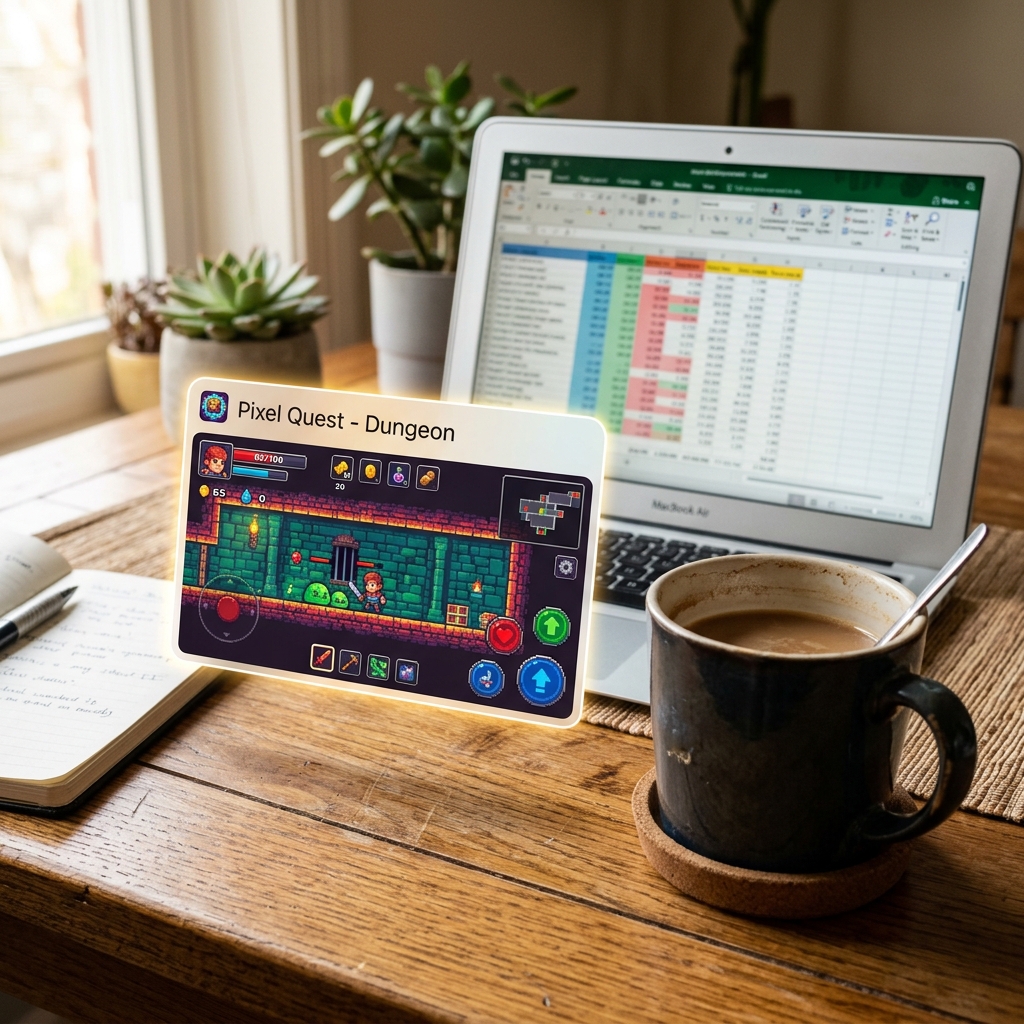
Two snapshots from the session

Where the format earns its place
GamesUnlimited is easiest to recommend as an on-ramp: a place to sample a quick game without committing storage, setup time, or a gaming-specific account. It is particularly useful on computers where installing software is restricted, provided browser access is allowed. In that setting, the lack of an installer is not a minor perk. It is the difference between being able to play and not being able to play.
But the format should be judged on the session it offers, not on the deeper games it does not try to be. Players looking for long-term progression, a rich campaign, or a community that follows them across devices may prefer a downloadable game, even if it takes longer to set up. The tab wins on immediacy. It gives ground on control, continuity, and sometimes performance.
So the closing session log is simple: opened quickly, played a little, closed without cleanup. That is a real strength, especially when a spare ten minutes is all there is. The question is what happens after the novelty of instant access wears off. Does the game hold your attention once the tab is open, and does the ad break, the input feel, and the screen you are using let you finish the round?
Sources

He is a house writer for GamesUnlimited. He covers co-op campaigns, controller design, and player rituals through reports from launch nights and living rooms.