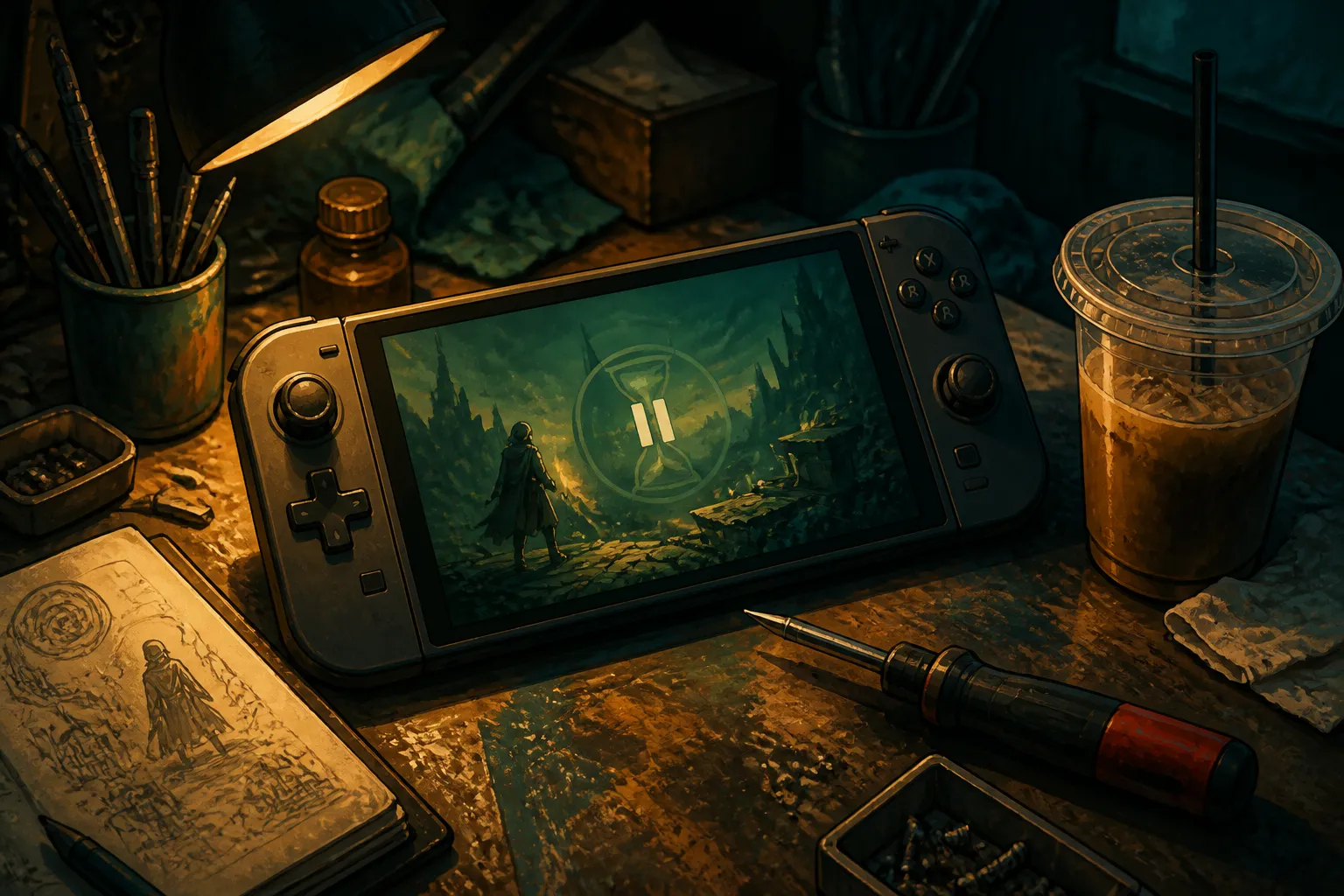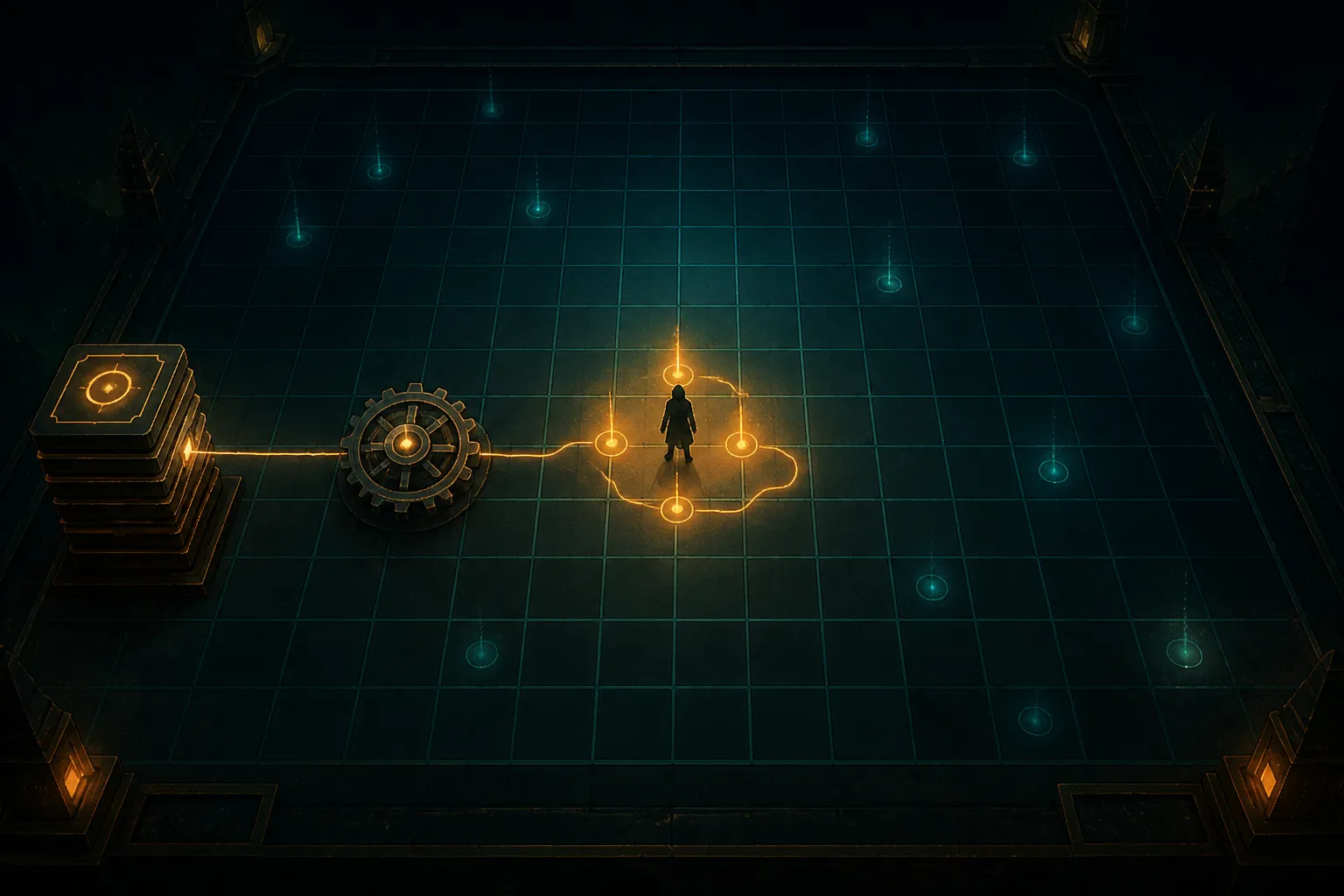
The first minute is the whole review. A visitor meets one button, one hazard, and a question that arrives faster than any menu: did that press do what I thought it did? One Button Dodge is intentionally small, which gives it nowhere to hide. The promise is not a long feature list. It is a clean, legible loop that makes a close call feel like the player’s doing.
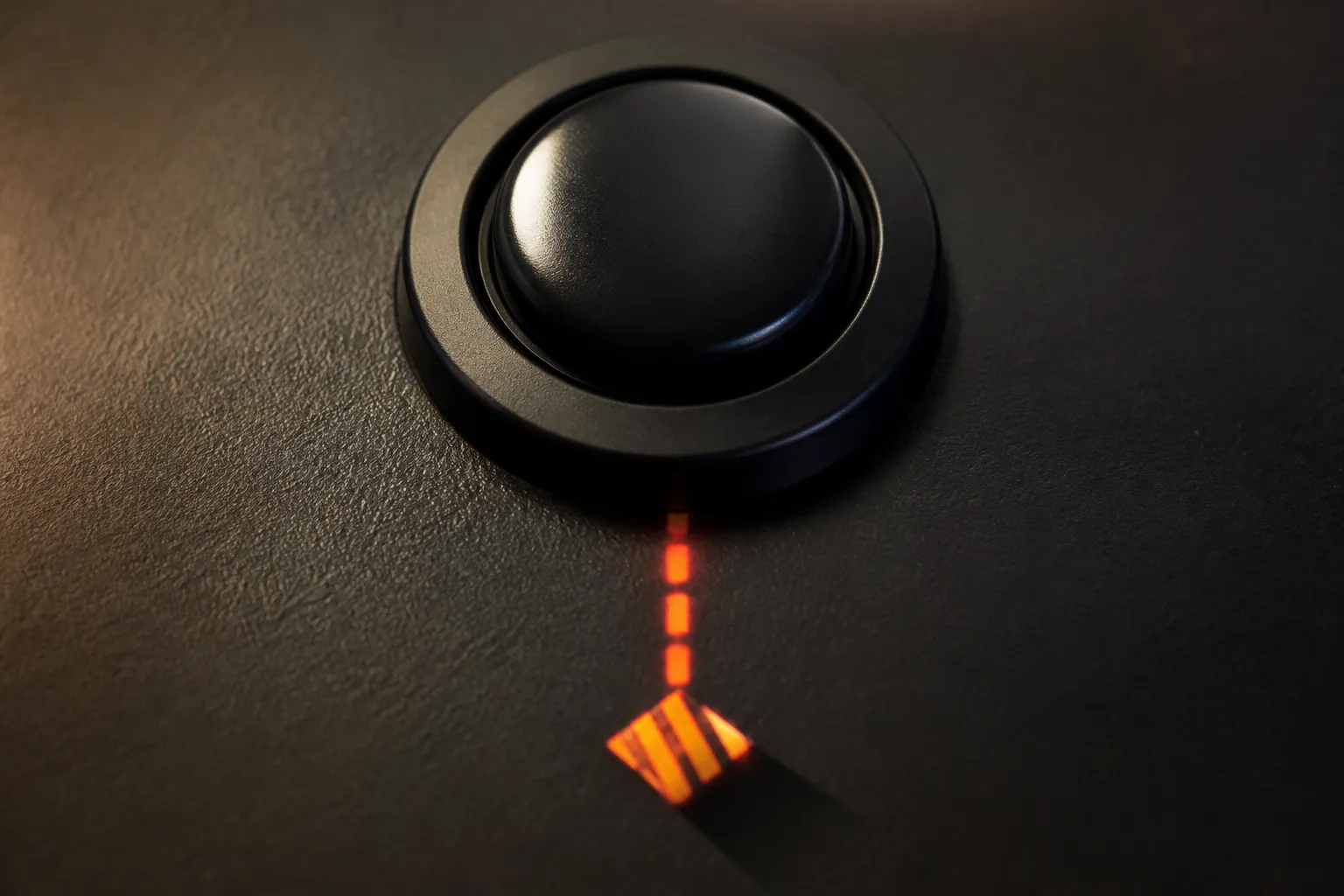
Session note: press. Watch. Decide. If the game visibly changes state, the player has something to learn from. If nothing seems to happen, difficulty is beside the point. The loop has not introduced its central verb clearly enough to invite another try.
Then comes the hazard. A miss needs a readable cause, even if the explanation is as small as timing or spacing. The player should be able to reconstruct the moment: “I pressed there. The hazard was here. I was late.” Without that little account, a near-miss cannot land.
And then the screen has to let the player back in. A quick retry keeps the thought alive: “One more, earlier.” A wait, extra navigation, or reload breaks that line of thought. In a tiny game, the distance between attempts is part of the feel.
Why a tiny game has nowhere to hide
One Button Dodge’s small scale is a useful test of design discipline. With a single input, there are few mechanics to distract from the interaction itself. Timing, feedback, and consequence have to do the work that a larger game might spread across systems, tutorials, and menus.
That makes the opening minute unusually important. A visitor is deciding whether the game feels fair, whether the screen can be read, and whether another attempt sounds worthwhile. The game does not need to explain everything at once. It does need to make the first action understandable enough that the player can start forming a better second one.
This is where the review’s central standard holds up: can you feel yourself improving across attempts? If the answer is yes, simplicity becomes focus. If each failure arrives without a clue, the single button feels less like an invitation and more like a guess.
What makes a near-miss feel earned
A satisfying failure leaves a short replay in the player’s head. “I almost had that.” That reaction depends on a visible relationship between the input and the outcome. The player may have acted too soon or too late, but they need enough information to believe a slightly different press could have worked.
The alternative is the blank stare after an unexplained hit. If the hazard is hard to read, or its timing seems random, the player is more likely to blame the page than their own decision. The result may technically be close, but closeness alone does not create a near-miss worth repeating.
There is a limit to what can be claimed here. The review offers no formal definition of a near-miss and no distance or timing threshold for “almost.” It gives a practical test instead: after failing, can the player identify what they would change? That is a useful standard, though it is not a measured result.
The first press is the interface
In a one-button game, the button prompt is only part of the interface. Movement, color, spacing, score, and animation can all tell the player what their input changed. The first press should produce a visible response. Without one, the player cannot tell whether they acted correctly, whether the game registered the press, or what to try next.
Think of the opening as a small exchange. The player presses. The game answers. The player adjusts. A clear answer can be spare, but it has to connect action and consequence. Decorative feedback that does not clarify the hazard or timing may add motion without adding understanding.
That connection is also what gives repetition meaning. A second attempt can be more informed than the first only if the game has shown the player something. Otherwise, the session log reads the same way each time: press, fail, shrug.
Restart speed belongs to the design
A restart is not housekeeping after the real game. It is the hinge between one decision and the next. When a run ends, the player still has the timing in mind. An immediate retry lets them test a changed press while that idea is fresh.
Friction between attempts spends that attention. A pause, a menu, or a reload can turn a close call into a chore before the player has decided whether it was their mistake. For a game built around repeated tries, a fast return is part of the core interaction, not a convenience bolted on later.
Verdict: ask four questions, then press again
The available evidence is narrow: one self-published editorial review, with no playtest data, retention figures, or comparison across games. It also does not examine how difficulty tuning changes the feel of a near-miss. So this is best read as a focused checklist, not a measured verdict on every player’s experience.
Still, the checklist is sharp. Does the first press visibly change the game state? Is the hazard clear enough that a miss feels like your mistake? Does failure feel close enough to be “almost,” rather than random? Does the retry arrive without friction?
Any one of those answers can shape the next attempt. The strongest version of a one-button dodge game gives the player a clear action, a readable consequence, and a quick chance to adjust. After a miss, do you know what you would do differently, and are you already reaching for the button again?
Sources

He is a house writer for GamesUnlimited. He covers co-op campaigns, controller design, and player rituals through reports from launch nights and living rooms.