Every game stops to ask the player something. Hades II asks you to pick a Boon, and the question is a fair one. The trick is not to spend a minute answering it.
What the screen is actually asking
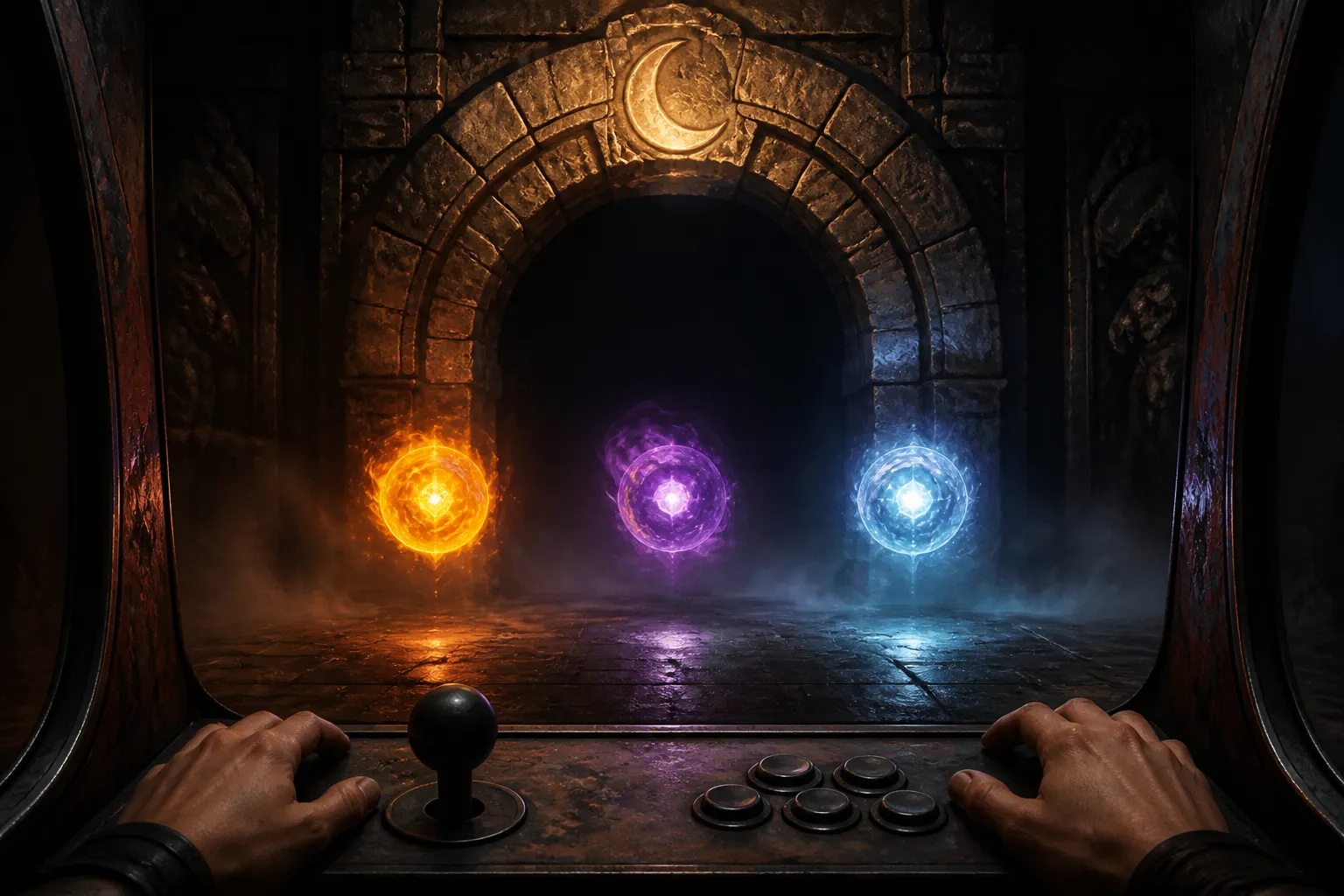
You clear a room. A reward appears. Three Boons from one god sit in front of you, and you take one. That is the whole transaction. Boons are blessings Melinoe earns from the gods, and each god has a symbol that shows up on the gates in Erebus. [2][3]
That detail matters more than it sounds. The sigil on the gate tells you who is about to make the offer. You are not reading the screen cold. You walked toward it on purpose. Decide what you want from that god before you step through, and the pause shrinks to a glance.
Slots first, text second
Melinoe carries one Boon per slot: Attack, Special, Cast, Dash and Call. Put a new Boon in an occupied slot and it replaces the old one without ceremony. [2] That is the first red flag, and it is the cheapest to avoid.
So read the slot before you read the flavor text. Which of the three options lands where? Which slot would it overwrite? If the slot already holds a Boon you like, skip the new one. Boons also vanish on death, and every run starts bare, so nothing you swap is permanent. [2] That should lower the stakes. A bad pick costs you one run, not the whole game.
- Check the god's sigil before you enter the gate.
- Find the slot each option would fill.
- Note whether it overwrites something you want to keep.
A worked example, start to finish
Here is an invented screen to show the order of operations. The sources do not describe layout, so this is a method, not a published procedure.
You walk through a gate with Aphrodite's sigil. Before the screen opens, you already know the offer will be hers. Your goal this run is Weak, which Aphrodite can bring. [2] Three options appear. One fills your Attack slot, which already holds a Boon you like. Skip it. One fills Dash, which is empty. One fills Cast, which is also empty. Now compare only those two. Whichever fits your weapon and your goal wins. That took three looks, not a page of reading.
The order is the point. God first. Slot second. Goal third. Text last, and only if two options tie.
Colors, Keepsakes and the cost of dithering
Rarity comes in five tiers, shown by color: Common is white, Rare blue, Epic purple, Legendary orange and Heroic red. [3] Color is the fastest thing on that screen. Your eye gets there before your brain does, so use it as a tiebreaker when two options fit equally well.
Keepsakes tilt the odds before you ever see the screen. You earn one from each god by gifting them Nectar. Equip it and that god's Boon turns up more often, and one of their offers can come in at a higher rarity. [3] Do the gifting early. One guide warns that if you accept a Boon without giving the Nectar first, the sigil disappears. [3] It does not explain the mechanism further, so treat it as a plain rule: gift first, accept second.
A Pom of Power, the pomegranate-looking item, raises a Boon's quality when consumed. It turns up on doorways or in Charon's shop. [3] Ask one thing before you spend it: does this Boon sit in a slot I plan to keep all run? If the answer is no, hold the Pom for a later pick.
Status effects as a shortcut
Every god has a style. Aphrodite brings Weak and Charmed. Apollo brings Daze. Ares brings Wounds. Demeter leans on Chill, and Zeus on lightning. [2] You do not need to memorize every Boon. You need to know what each god does, then match it to your weapon and how you play. [2]
Before a run, pick one status effect you want and hunt for it. Ignore the rest of the text. A player with a single goal can scan three options quickly. A player with no goal tends to read all of them twice. That is a suggestion, not a measured result.
The odd offers
Not every screen is plain. Gods may offer to swap one of your equipped Boons for one of theirs. [3] Chaos Boons ask for a stipulation in return for a reward, which changes the run. [3] Infusion Boons need elemental Essence from Chaos. [3] Duo Boons combine two gods, and Legendary Boons, one per god, require that you favored that god during the run. [3]
Slow down for these. They are the rare cases where a pause is earned, because a Chaos stipulation can shape the rest of the run.
What the sources do not tell you
None of the guides I read cover button prompts, screen layout or timing. They do not say how fast a good player should read the screen, and they do not explain how rarity odds are set. The IGN page gave no Boon detail beyond navigation. [1][2][3] So the speed advice above is my own habit, not published fact.
The screen itself is simple. Your prep is what makes it fast.

Marguerite Osei is a house writer for GamesUnlimited covering classic arcade cabinets, pinball, and the hardware that keeps them running. She spent two decades repairing machines in family arcades before she started writing about them. Her reviews weigh how a game plays against how well it holds up to a thousand quarters.