The warning flashes, the hazard crosses the lane, and your thumb moves. On the next run, the same cue arrives and you move too soon. Fast arcade play turns a simple dodge into two jobs: notice what is coming, then choose the right response before the screen closes the gap. A quicker thumb helps with only one of them.
A fast response is not yet a clear read
Research gives the speed question a useful starting point. A 2009 review by Daphne Bavelier, C. Shawn Green and Matthew Dye argues that action video game play can reduce reaction times without sacrificing accuracy. The authors also describe gains on tasks beyond the games themselves, and suggest that video games could train faster perceptual responses. The review makes a case for speed and accuracy together, not speed alone.
That distinction matters at the point of play. Reaction time is the interval between a stimulus and the start of a response, according to a general overview of reaction times. The clock can stop when a player begins to act. It does not, on its own, tell us if the player identified the hazard correctly, picked the right lane, or moved in time to avoid it.
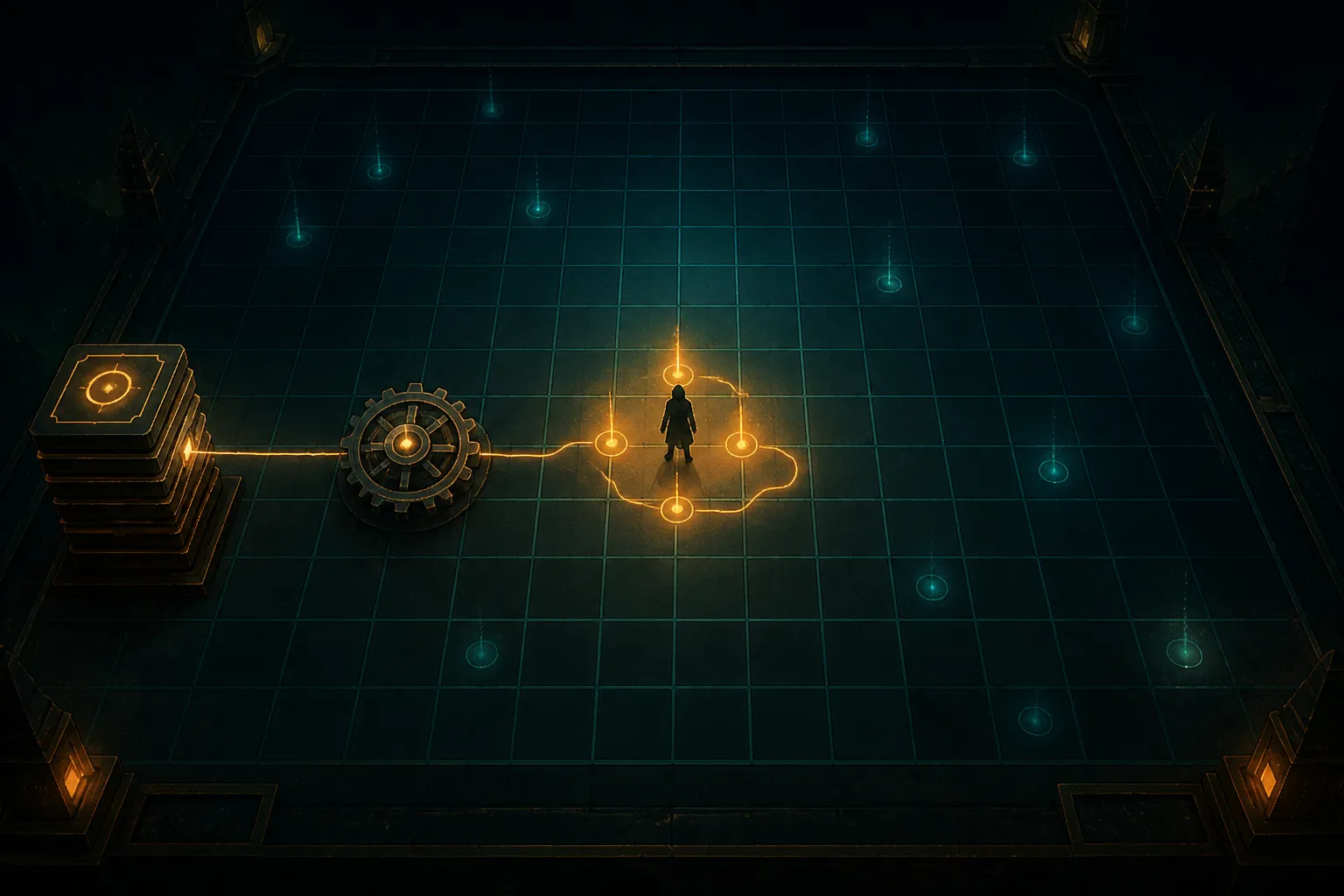
Picture a bright shape dropping toward a character. The player has to detect it, interpret its direction, decide what that direction means, and send a movement through the controls. Those steps happen in a tight chain. If the shape is mistaken for a harmless effect, a quick response can still be wrong. If the player recognizes the threat but the input arrives late, the read was right and the dodge failed. One screen, at least two different kinds of miss.
What a session can hide
At the start of a short session, the first hazard may demand a deliberate read: see the cue, watch its path, then move. After several repetitions, the player may begin to anticipate a pattern. Their response can look faster, but that does not prove the visual cue became easier to read. Experience might have supplied a prediction before the next hazard was fully in view.
There is a difference between reading a cue and remembering its schedule. A repeating sequence rewards preparation. A hazard that changes timing or direction asks the player to interpret fresh information. The review’s reported effects do not tell us how much of any speed gain comes from better perception, learned expectations, or other parts of play. Its available summary also does not provide the effect sizes, sample sizes, or specific tasks needed to apply the finding to one fast arcade screen.
Session note: first run, eyes on the character. Later run, eyes drift toward the edge where a warning tends to appear. That shift could be useful anticipation. It could also be a habit that breaks the moment a game changes the cue. A score records survival. It does not record what the player thought they saw.
The input has a body, and the screen has a clock
Players do not meet a hazard as a clean number in a paper. They meet it through a display, a control, a thumb or finger, and a particular state of attention. Age, fatigue, experience, and training can all affect response speed. The general overview gives about 250 milliseconds as an average visual reaction time, while noting that responses vary. That figure should be treated cautiously: the page does not show its measurement methods or supporting studies in the available material.
A long session changes the feel of the next input. The thumb still presses the same button, but the player may take longer to notice a cue or decide what it means. Fatigue is one possible source of slower responses. Age and experience also matter, so one hazard speed cannot be assumed to feel identical across a room of players.
Display refresh and controller responsiveness are often raised as ways to reduce delay. The general overview makes that claim, but does not provide a study for it. Lower delay could help the movement appear closer to the player’s input. It cannot, by itself, make an unclear warning easier to recognize. If a cue is small, low-contrast, or visually crowded, faster response hardware does not answer the question the player has to solve.
Browser play is the unanswered test
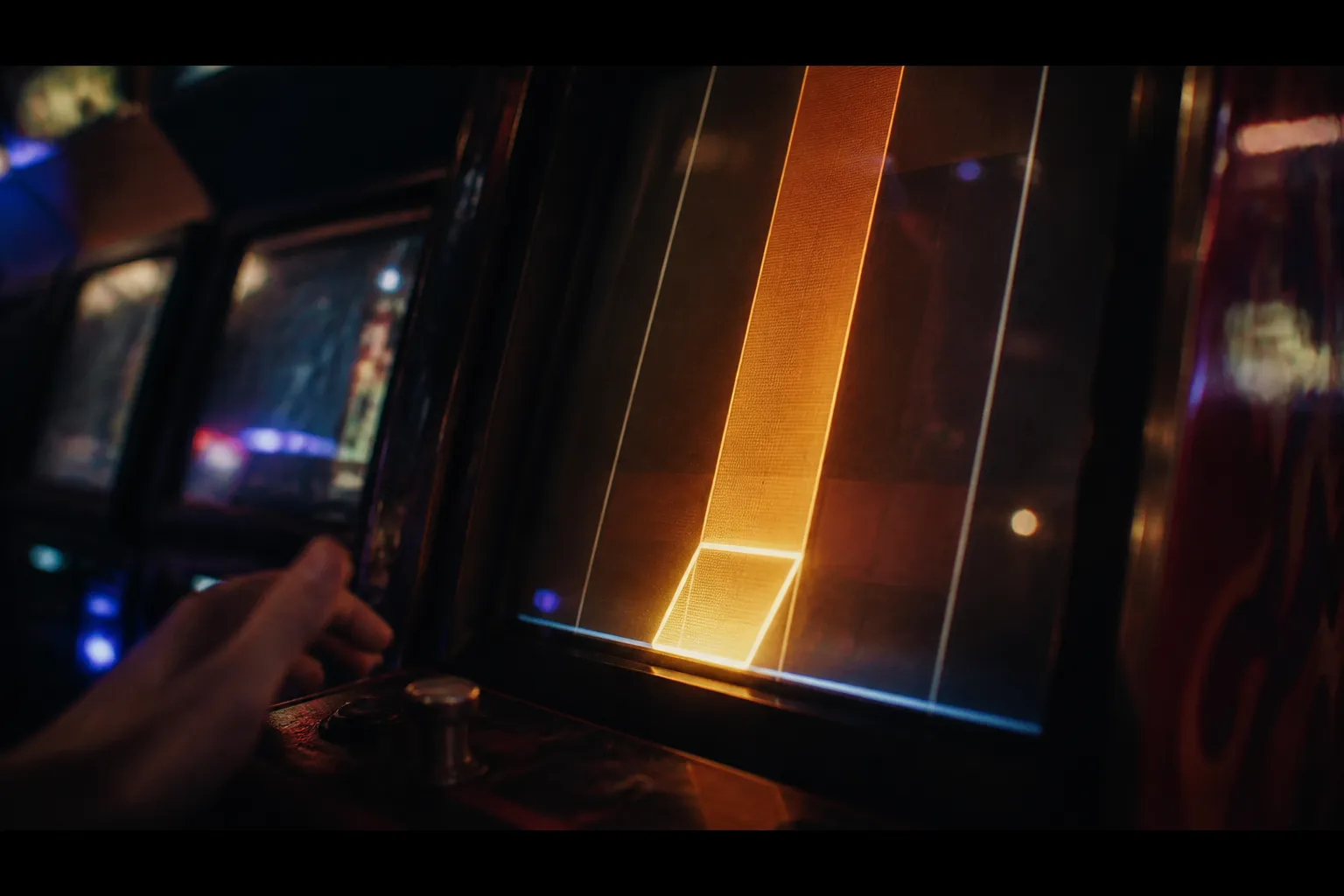
The research cited here does not establish whether action-game reaction-time gains carry over to browser arcade games, especially on small screens. It also does not test which hazard designs stay readable as speed rises. That leaves the central question open. A player may respond faster in a lab task or another game and still struggle when a warning is brief, the hazard is moving quickly, or the screen is packed with other motion.
For designers and players, it helps to name the failure before calling it a reflex problem. Was the cue noticed? Was its direction understood? Did the player choose the right action? Did the movement register in time? Those are different questions, even if the end of the run looks the same. A brief replay or a changed hazard pattern can make the difference clearer than a single score.
The evidence supports a careful claim: action game play has been linked by a review to faster responses without a loss of accuracy across studied tasks. It does not settle how well people read fast hazards in browser play, or how much a crowded small screen changes the task. Next run, watch the moment before the dodge. Did the player see the warning, or did they only feel that it was time to move?
Sources
- Increasing Speed of Processing With Action Video Games - PMC
- Understanding Reaction Times Through Gaming and Technology | Srpsko udruženje za geometriju i grafiku
- Frontiers | Enhanced predictive saccade strategies and spatial prediction accuracy in first-person shooter-specialized players
- https://vertexaisearch.cloud.google.com/grounding-api-redirect/AUZIYQHBM4Dx4W3YqObntjws3JBLzDWwiunE4jnnZaKMUGAbB2aMn5Mwidah78EiSRcD0J4vkB0wYLoawYvjqNL7LqCYi7pxfM2prGvRpA139njvNa6VDfDjXW1bHQaGer7Y8g9X3uJBOlslSOdNerzZUYxh75bJ93BB8D4_swJhoFAVh4nxyWNZUQQfsyew6Dwwvl_gJqc2-A4n
- Designing for Difficulty: Readability in ARPGs
- Featured Blog | 6 elements of visual guidance
- Keys to Combat Design: Anatomy of an Attack - GDKeys

He is a house writer for GamesUnlimited. He covers co-op campaigns, controller design, and player rituals through reports from launch nights and living rooms.