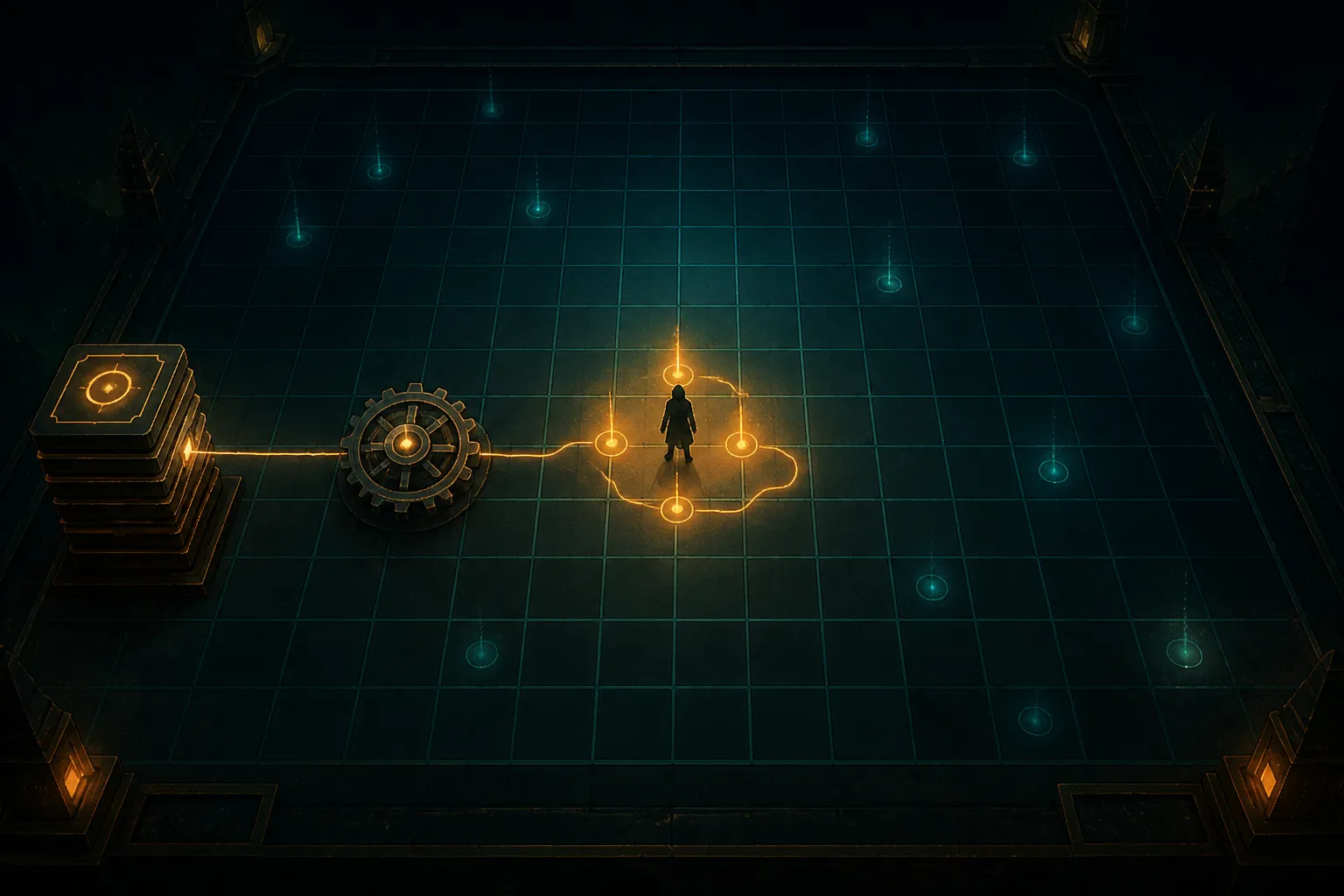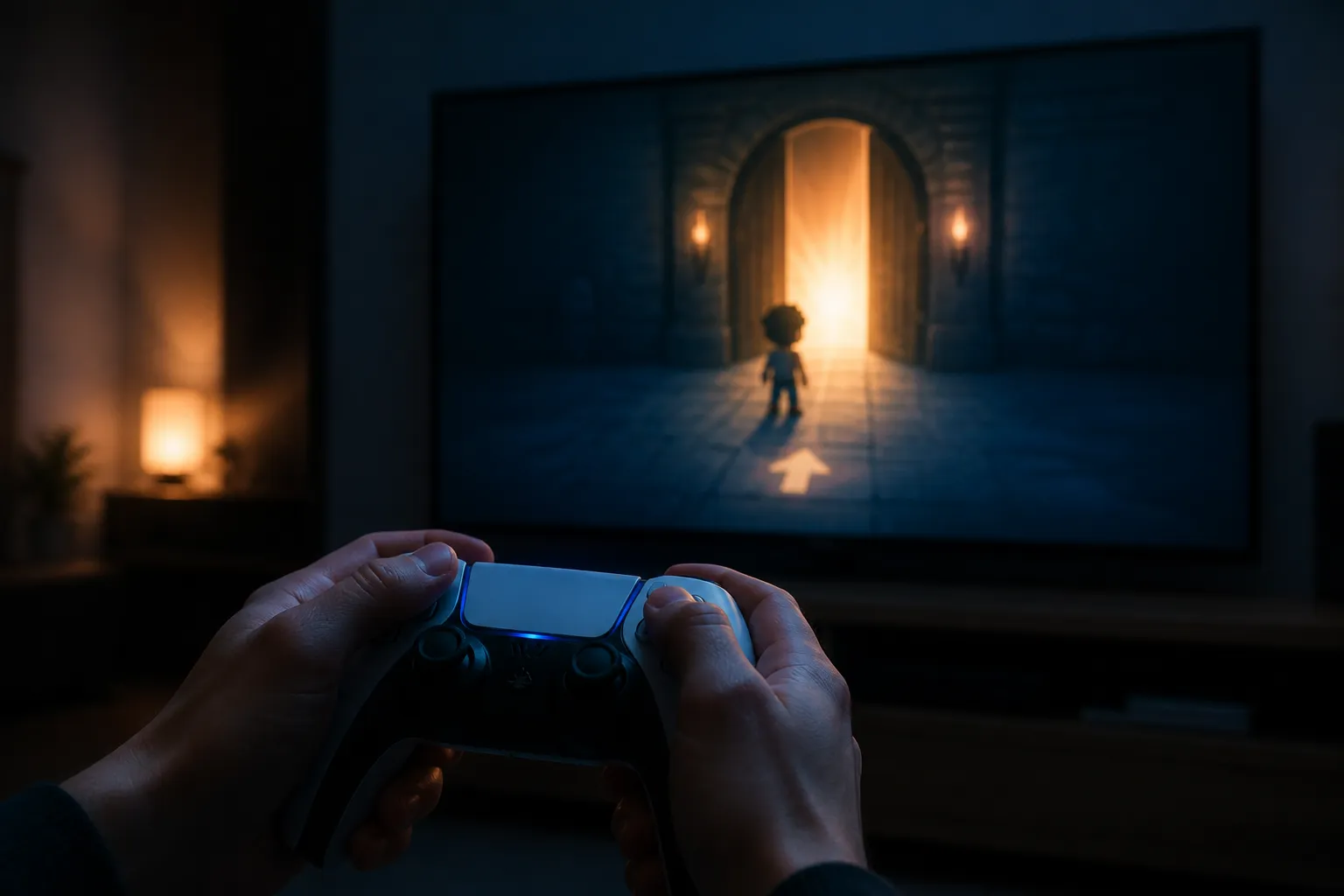
Picture a first session at a playtest. A new player nudges the stick, the character crosses a few steps of ground, and a door swings open. The player says nothing, but they lean in. This is a hypothetical scene, not a recorded one, and it shows the goal. The first rule lands when the game gives the player something to do and then answers the input.
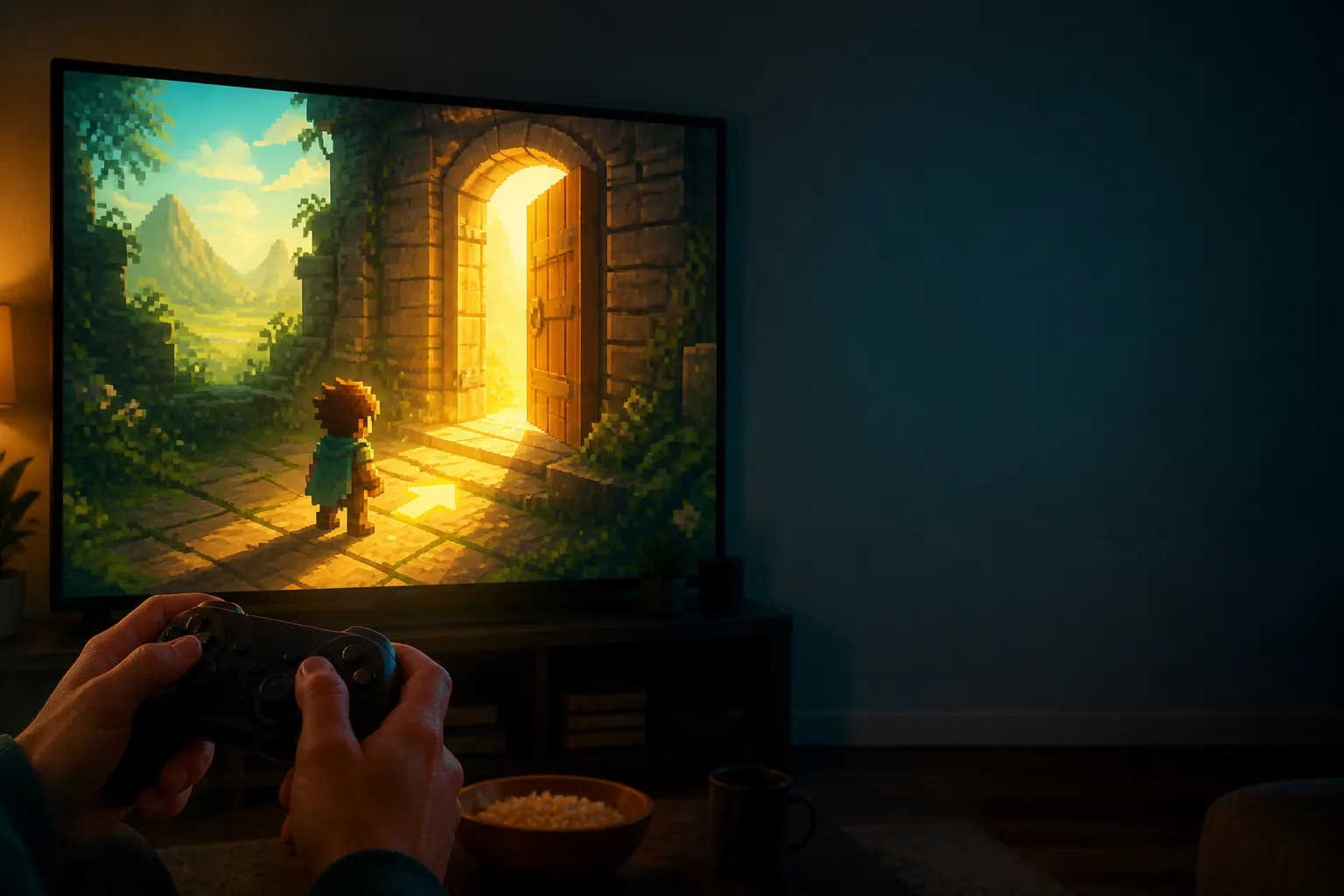
Open with one action, not a control list
A screen of buttons before the first playable moment asks players to remember controls without knowing why they matter. The player can read "jump," "interact," and "attack," then forget which one opens the door. A better first minute gives one action a purpose. Put an object within reach, show a small hint, let the player try, and make the result visible.
Metlivi's guidance, a German-language article on game controls, centers the first minute on one useful action. It pairs that action with a clear goal, a visible hint, a safe chance to try, and clear feedback. The details matter. A hint that names an input and links it to an on-screen action can guide without covering the play area. The player is not studying a control map. They are trying to reach the object.
The first action should also introduce the reason to play. Apple's game onboarding guidance recommends teaching the core loop first. Its role-playing example is fighting monsters, earning gold, and buying equipment. Those actions make the game's basic rhythm legible before the player has to absorb every system around it.
Teach one step at a time
Think of a first minute as a short chain. Move toward the gate. Interact with the gate. Then see what is on the other side. Each instruction has a place in the player's immediate task. If the first prompt explains movement, combat, inventory, crafting, and upgrades together, the player has to sort those rules before any of them has a context.
Apple recommends short, clear instructions that introduce one step at a time. It warns that assuming the player already knows an unfamiliar action may discourage them and lead them to abandon onboarding. Metlivi suggests picking the first action that unlocks the next meaningful moment, such as moving toward an object, talking to a character, or making a simple jump. The next goal should be easy to spot, so the player has a reason to test the input rather than wait for another paragraph.
When a game has more parts to teach, separate lessons can arrive when they become relevant. Apple points to Clash Royale, whose onboarding is split into five short tutorials that each add more complex elements. The useful idea is pacing. Give the player a first piece, let it work, then introduce the next one when the game has created a reason to use it.
Let the player act, then step back
"Try it now" is stronger than "Press confirm to continue," as long as the next action is safe. The player should be able to move as soon as they understand enough to make a choice. Metlivi adds that when an action is optional for experienced players, they can continue without a forced confirmation step.
Apple recommends giving players an active role and letting them start self-directed play as early as possible. Early tutorials can offer more guidance. Later ones can challenge players to show what they learned. That shift works as a quiet test. Can they use the action once the hint is gone, and can they carry it into the next challenge? Metlivi also suggests watching player reactions to decide whether another tip is needed at all.
There is a limit to how little a game can explain. Metlivi notes that a simple first action suits games with an easy opening, while unusual or consequential controls may need clearer instruction before play proceeds. A player should not have to guess at a control that could waste a rare item or trigger a costly mistake. The design question is how much explanation this action needs, at this moment.
Help on request: a note from general UX research
A forced walkthrough can interrupt the task it is meant to teach. The player is walking, a panel appears, and now the game asks them to read about walking. If the instruction does not explain what changed, the interruption has taken attention without helping the next decision.
One caution about sources. The NN/G article on onboarding tutorials and contextual help is general UX research about apps, not games. It argues that tutorials interrupt users, do not necessarily improve task performance, and are quickly forgotten. Its alternative is help that appears when a person looks for it, called a pull revelation. Game designers can treat this as a idea to test, not as proven game guidance.
The same article flags long, multistep tutorials that cannot be recalled or relaunched later, and uses a bike app as its example. The lesson that carries over is modest. If a player misses a prompt during a hectic scene, they should have a way to find the explanation again. Help should be available without demanding that every player stop and read.
Check the onboarding in a real session
Watch someone play without narrating for them. Note the moment they hesitate, the input they try, and what the game does next. Then ask a few plain questions. Did the first minute teach one useful action? Was the goal visible? Did the player get a safe chance to try, followed by clear feedback? Could they repeat the action later without a prompt?
Also check when help arrives. Does it answer a question the player has, or interrupt a task they already understand? Can they find the instruction again? Does each new lesson come just before the player needs it, and does the game eventually leave room for unguided play?
These are questions to test, not guarantees of better retention. The sources cited here give no measured retention, completion, or conversion figures comparing tutorial approaches. They also do not cover browser games, no-install formats, or how to teach controls across keyboard, touch, or assistive input. Those details need direct testing with the actual game and the people playing it.

At the end of the first session, ask the player what they learned without showing them the control list. Which action do they remember?
Sources

He is a house writer for GamesUnlimited. He covers co-op campaigns, controller design, and player rituals through reports from launch nights and living rooms.