Jeff Minter released Tempest 4000 in 2018 and the arcade press received it the way they receive most things that smell of neon and stubbornness: with cautious admiration and a few pointed complaints about the price. Two years later, those complaints have not disappeared. The game still costs what it costs, and the visuals still threaten to vibrate your skull. What has changed is the leaderboard, which has accumulated enough data to tell a clearer story about what this tube shooter actually is and who it was always meant to punish.
The Minter Legacy and What Tempest 4000 Was Always Trying to Be
The history here is not short. Minter made Tempest 2000 for the Atari Jaguar, followed it toward Tempest 3000, detoured into Space Giraffe on the Xbox 360 (which was, as Gamecritics reviewer Zack Zweizen put it, basically Tempest but weirder), and eventually built TxK for the PlayStation Vita, which lived until Atari's lawyers noticed it. Tempest 4000 is what came out the other side of that legal standoff, produced this time with Atari rather than against them.
None of those games were attempts to modernize Dave Theurer's original concept. They were attempts to intensify it. Minter's version of progress is not adding a narrative or softening the edges for new players. It is turning up the color, tightening the geometry, and trusting that the people who want to be there will find their way to the claw. Tempest 4000 follows that logic without apology. The screen becomes almost illegible at speed, and that is a design choice, not a bug from a deadline.
What the Critics Said Then and Why It Still Matters
At launch, the critical response settled somewhere between genuine enthusiasm and polite frustration. Trusted Reviews acknowledged the kinetic energy and the soundtrack. Zweizen at Gamecritics documented the specific shape of the problem: great music, great menus, visuals that slide from exhilarating into annoying, and controls that carry a looseness the scoring system cannot forgive. Thirty dollars for a game this short on content felt steep to most reviewers, and Metacritic's aggregate placed it firmly in the "good but not essential" column.
That aggregate is not wrong, exactly. It is just measuring the wrong thing. A game built around leaderboard competition and repetitive high-scoring runs does not reveal itself in a review window. What critics were describing was the first hour of a game whose real content begins somewhere around hour twenty, when the visual noise starts to parse as information rather than interference. The thirty-dollar complaint has also aged differently than expected: the physical release gave the game shelf presence that most digital-only contemporaries lost when storefronts reshuffled their catalogs.
The Leaderboard as the Real Game
Two years of scores have made one thing obvious: Tempest 4000's three modes, Pure, Classic, and Survival, each feed separate leaderboards, and the gap between the top handful of scores and the median player is not a gentle slope. It is a cliff. That gap is the game. It is the same kind of cliff that appears in Missile Command, in Galaga, in any game where the skill ceiling is structural rather than content-gated.
Watching a high-level Pure run makes the mechanics legible in a way that playing casually does not. Superzappers come out on a surgical count, not a panic. The spinner moves to where enemies will emerge, not where they already are. The visual noise the critics flagged is still there, but the top-ranked players have stopped fighting it. They are reading something underneath it, a positional grammar the game never explains and never apologizes for withholding. That is, historically, how arcade games have always worked. The quarter taught you. Now the leaderboard teaches you, and it is no more patient.
Where the Game Sits Now in the Arcade Revival Landscape
The arcade revival that surrounded Tempest 4000's release has since produced a more crowded field. Nex Machina, various Geometry Wars retrospectives, and a long queue of roguelite shooters have all made competing claims on the attention of score-chasers who want structure without story. In that crowd, Tempest 4000 is the one standing slightly apart and not particularly bothered by it.
It is less approachable than most of its contemporaries. It does not tutor. It does not smooth the difficulty curve into something a new player can ride comfortably from one end to the other. These qualities looked like deficits in 2018 and read closer to virtues now, partly because the games that did tutor and smooth have mostly been forgotten, and Tempest 4000 has not. Minter's continued presence in the community, talking publicly about the format and what the tube shooter can still do, has kept a conversation running that most arcade-revival games never managed to start.
The game remains on PlayStation 4, Xbox One, and PC. The physical copy is still findable. The leaderboard still posts your score where everyone can see it. That is, by the measure of arcade longevity, a reasonable outcome for a game that was always more interested in judgment than in mercy.
The Verdict Two Years On
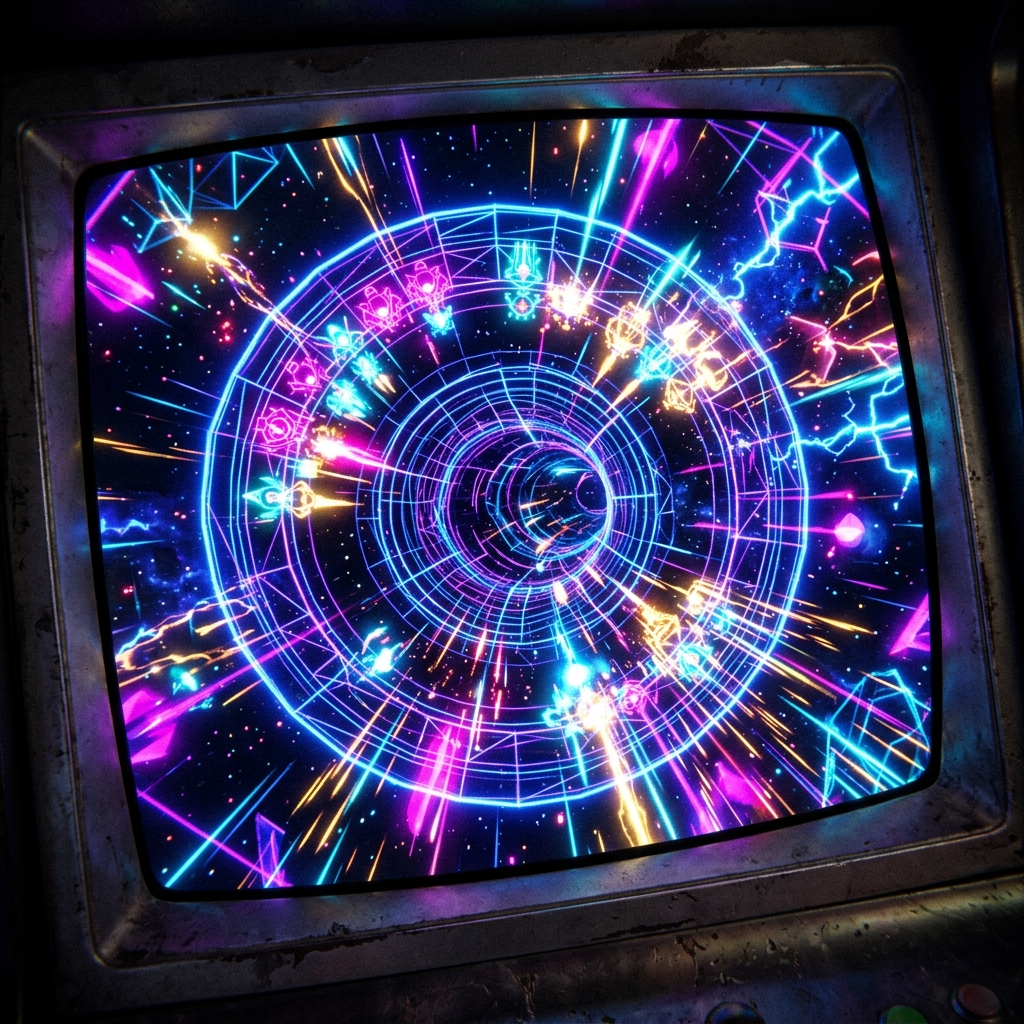

Tempest 4000 is not a game that improves because it changes. It improves because you change. The tube still rotates at the same speed it did in 2018. The enemies still crawl up from the same depths. What shifts is the player's ability to stop flinching at the light show and start reading it as geometry. That shift takes longer than any review window allows, which is why the two-year view tells a different story than the launch-week one. The leaderboard was always the point. It just took time for enough people to get scored by it to make that clear.
Sources

Marguerite Osei is a house writer for GamesUnlimited covering classic arcade cabinets, pinball, and the hardware that keeps them running. She spent two decades repairing machines in family arcades before she started writing about them. Her reviews weigh how a game plays against how well it holds up to a thousand quarters.