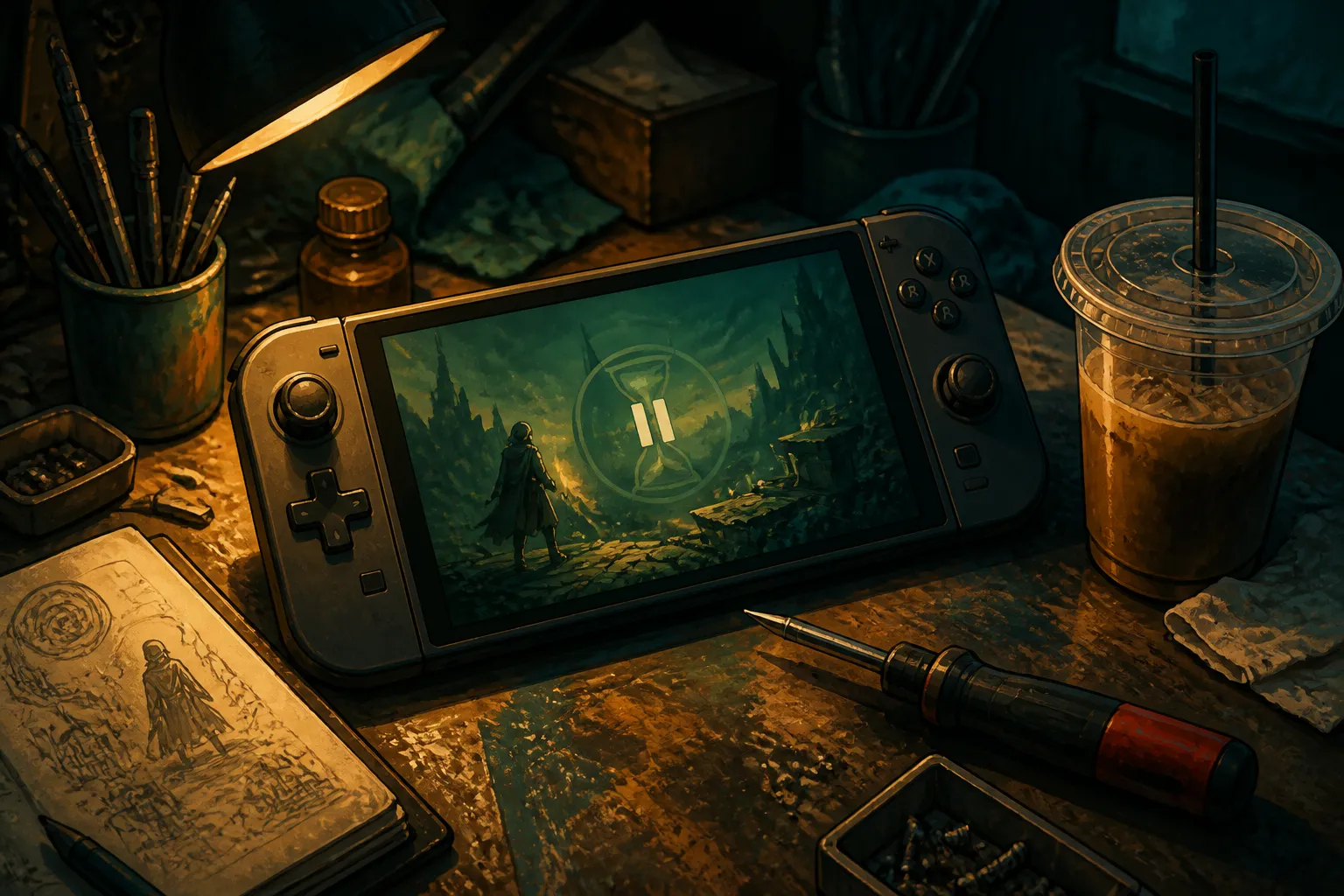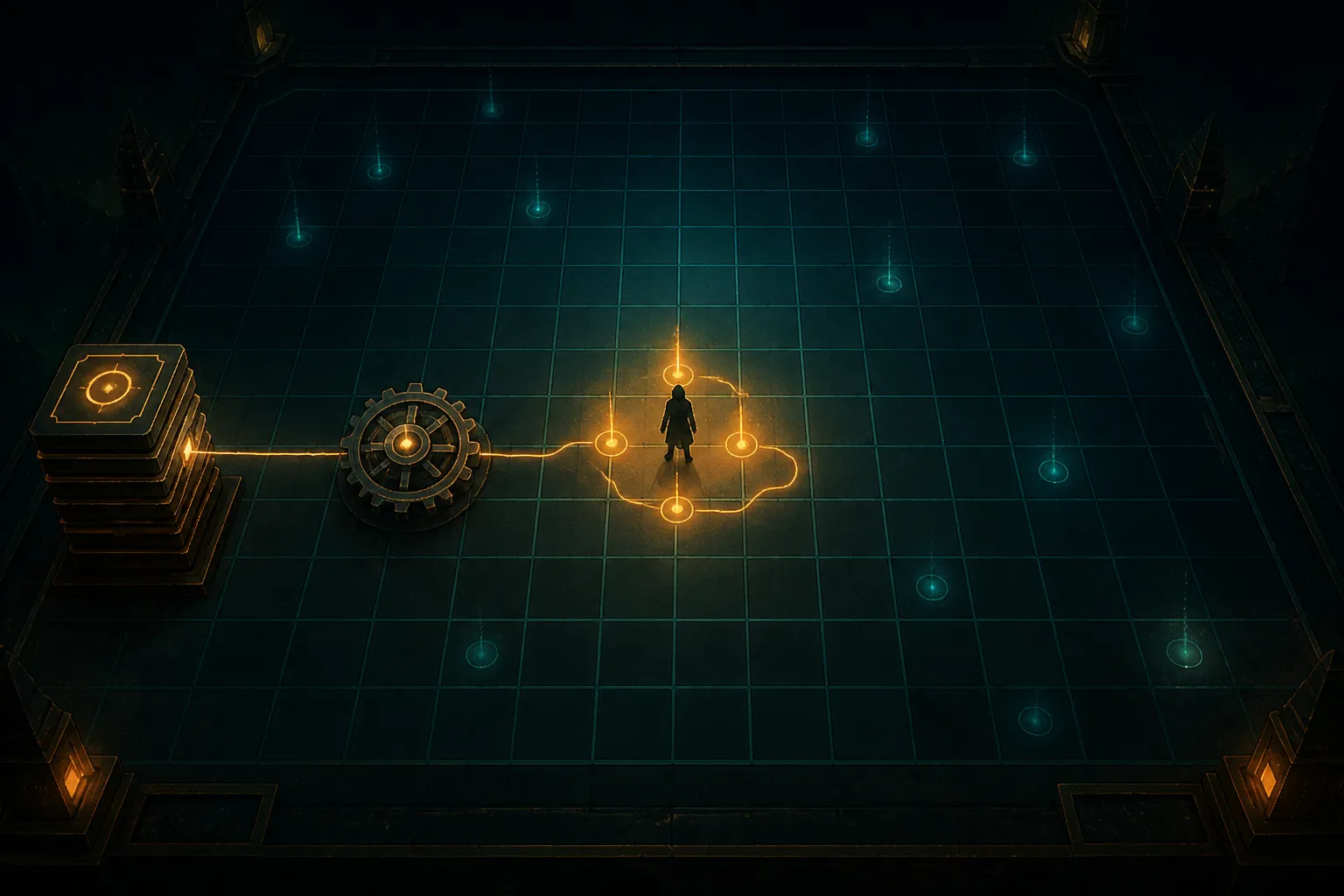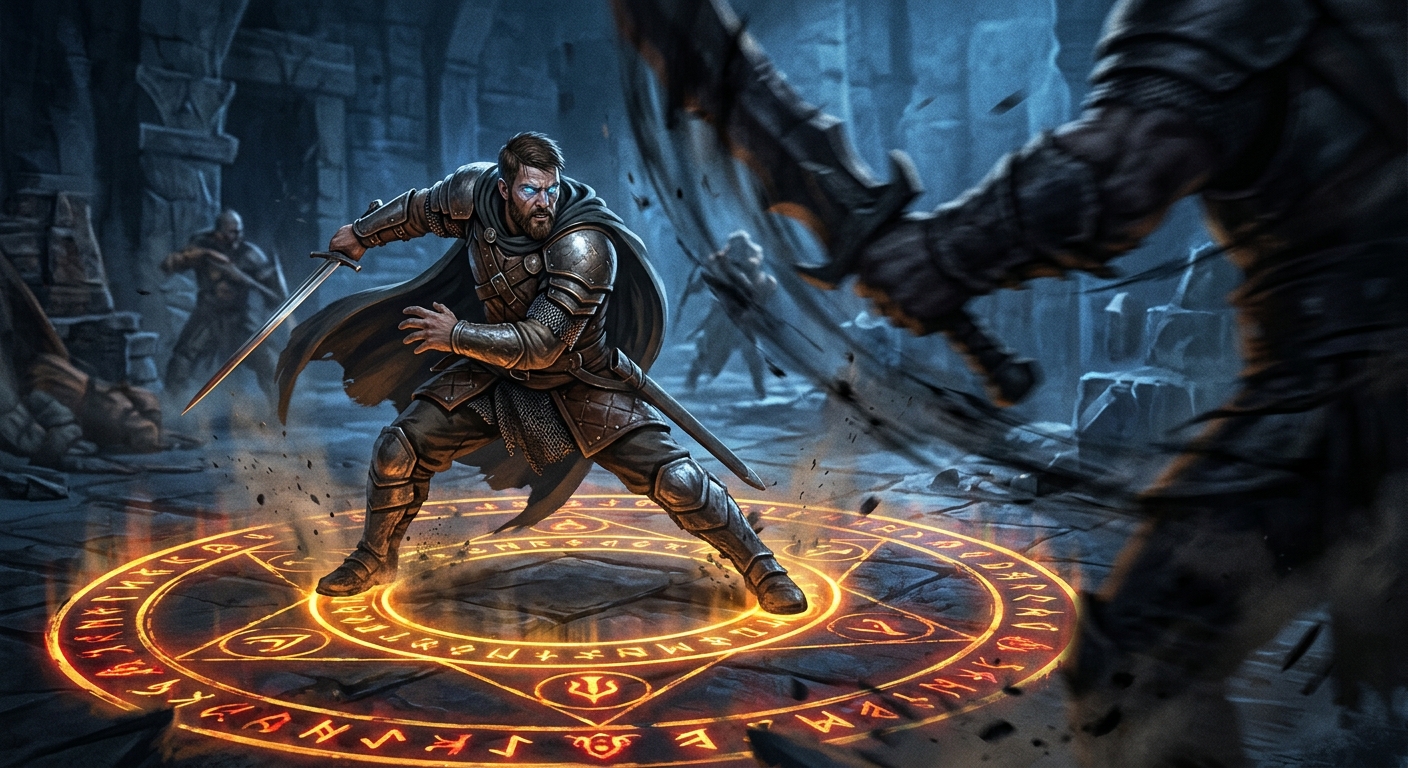
The floor flashes once. A low whine rises under the music. Across the screen, an enemy pulls its arm back, holds for a breath, then swings. Three signals, one incoming hit. The player taps dodge and clears the arc by a fraction. In that brief exchange, difficulty has already been decided. The collision is only the final beat.
The Telegraph as a Design Promise
A hazard telegraph is a promise that danger will arrive with enough notice to matter. The warning might be a glowing patch of floor, a weapon winding up, or a sharp change in sound. Its job is to make the coming hit understandable before it becomes damage. The player still has to notice, decide, and act. A fair warning does not make a fight easy. It makes the loss legible.
That distinction shows up in the half-second after a mistake. A player gets clipped and says, “I rolled too early.” That is useful information. Next time, they can wait. A player gets hit and says, “Where did that come from?” has no clear adjustment to make. The first outcome can teach. The second can feel like a hidden fee charged at the edge of the screen.
Design criticism often uses “fake difficulty” for punishment that arrives without a meaningful chance to respond. The label is useful when it points to a design problem, not just a hard encounter. A discussion of the idea at Wayline frames the key question: does the challenge ask for skill, or does it merely impose a penalty? Telegraphs help answer that question. They show whether the game gave the player information they could use.
Session note: first attempt, take the hit. Second attempt, spot the wind-up. Third attempt, dodge late and keep the attack window. That small progression is the pleasure of a readable hazard. The game has not become kinder. The player has learned its timing and earned a better result.
Color, Shape, and Motion Give Danger a Form
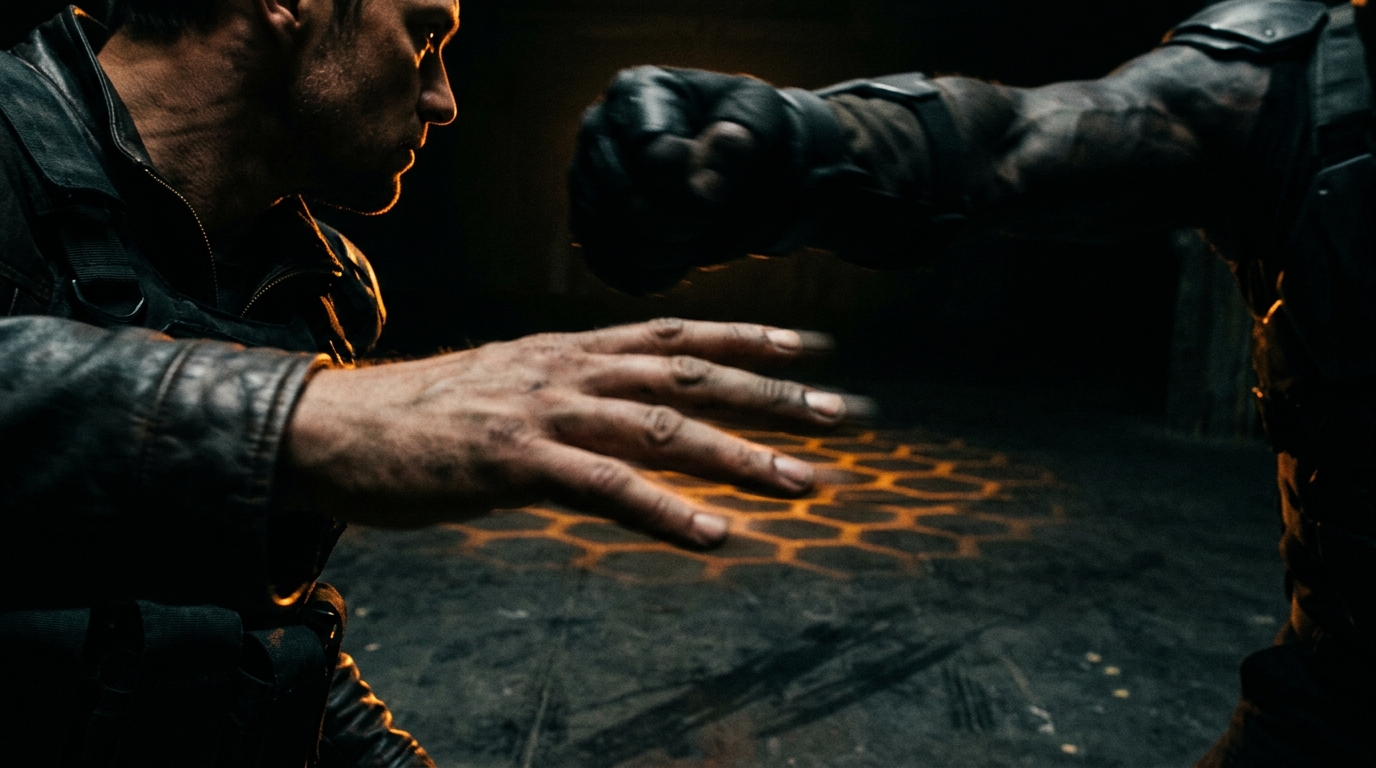
Color is quick to read, which is why red so often marks an incoming threat. But color alone can blur into scenery, interface effects, or another player’s ability. Strong warnings give the eye a second clue. A hazard might brighten and widen, a projectile might spin faster as it closes in, or an enemy might settle into a distinctive stance before a charge.
Motion does special work. A short pullback gives the eye a direction to follow, and the body a beat to prepare. A sudden leap from a neutral pose is harder to parse because there is less visible transition between “safe” and “dangerous.” In an action game, that transition is part of the move’s grammar. Learn the posture and you can read the attack before its hitbox reaches you.
Redundant signals help when the screen gets crowded. A bright outline can mark the danger zone while particles show its edge and a camera jolt hints at its direction. These cues should agree. If the glow points one way and the actual strike arrives from another, the player learns to distrust the warning. If they line up, the player can catch at least one signal while tracking enemies, movement, and their own position.
Environmental hazards have a harder job than an enemy with a readable body. A patch of floor cannot pull back its arm. It can still change color, crack, spark, or make a rising sound before it erupts. The warning needs to stand apart from decoration, especially when a level uses the same visual effects for harmless atmosphere.
Sound and Rumble Reach Past the Center of the Screen
A busy screen can turn visual attention into a limited resource. The player watches a boss, tracks a projectile, checks a health bar, and tries to keep clear of the arena edge. A sound cue can report danger without asking the eyes to leave the action. A rising pitch, a distinct warning tone, or a change in an enemy’s vocalization can all carry timing and direction.
Controller rumble adds another channel, but its meaning has to be clear. If every collision, menu tap, and distant explosion produces the same strong vibration, the warning becomes noise. A short pulse that signals an approaching strike can feel precise. A long rumble that begins at impact may add weight, but it cannot warn the player in time. The difference is a few moments of input feel, and those moments decide if the controller is helping or merely confirming damage.
Timing matters as much as the cue itself. An early sound risks blending into the music or the player’s expectations. A late sound can become a dramatic flourish after the chance to dodge has passed. Good cues leave enough time to act, then land close enough to the event that players can connect warning and consequence. Players should be able to say, “That tone means move,” and test the lesson on the next attempt.
The Warning Window Sets the Difficulty
Telegraph duration is one of the game’s clearest difficulty controls. Give an attack a generous wind-up and the player can identify it, choose a response, and perhaps reposition. Shorten that lead and the same attack asks for quicker recognition. Keep its shape consistent and a skilled player can still react. Remove the lead entirely and the attack may read as surprise damage rather than a test.
A game can teach a hazard with a long, unmistakable warning, then bring it back later with a tighter window. That progression asks the player to internalize the cue. The important detail is continuity. If the signal changes without a reason, earlier learning stops helping. If the signal remains readable while the available time shrinks, the player can see how mastery is being measured.
There is also a difference between reaction and prediction. With enough experience, a player may dodge when an enemy begins its familiar motion, before the warning reaches its loudest or brightest point. That is earned anticipation. But the cue still needs to be there. Without one, success depends on guessing or memorizing a location rather than reading the fight as it unfolds.
Difficulty settings can change the warning window, but the result should remain coherent. A faster attack can feel demanding while still announcing its path. A hazard that appears under the player with no readable lead can feel arbitrary at any speed. The question is not simply how long the warning lasts. It is whether the player can understand what to do with it.
Fairness Has a Tone, Too
Telegraphs shape more than mechanics. A crisp flash and a clean sound tell the player, “React now.” A faint scrape in a dark room can say, “Something may be near,” which sustains dread instead of offering a neat answer. Horror games can withhold certainty to create tension, but they still need to decide what kind of uncertainty they want. Confusion and suspense are different experiences.
Character animation can make a warning feel personal. A foe that squares its shoulders before a heavy strike communicates weight and intent at once. The move has a mechanical tell, and the body language gives it attitude. Environmental warnings can tell a story in another register: a wall that pulses before opening, a floor that fractures along a seam, a light that drains from a room before a threat enters.
When the design works, players often call a game “readable” without listing the details that make it so. They feel the cue, adjust their thumb, and keep moving. At the end of a session, the useful question is not only how many times the player was hit. Could they name the warning? Did their response change on the next try? When the next signal comes, will it feel like an invitation to act, or damage already on its way?
Sources

He is a house writer for GamesUnlimited. He covers co-op campaigns, controller design, and player rituals through reports from launch nights and living rooms.