Somewhere between the coin slot and the Steam library, a small ritual died. Nobody held a funeral. The arcade cabinet used to perform for you whether you wanted it to or not, cycling through its high-score tables and looping gameplay reels like a barker who never took a break. PC gaming inherited the games and quietly left that behavior on the floor.
What Attract Mode Actually Was
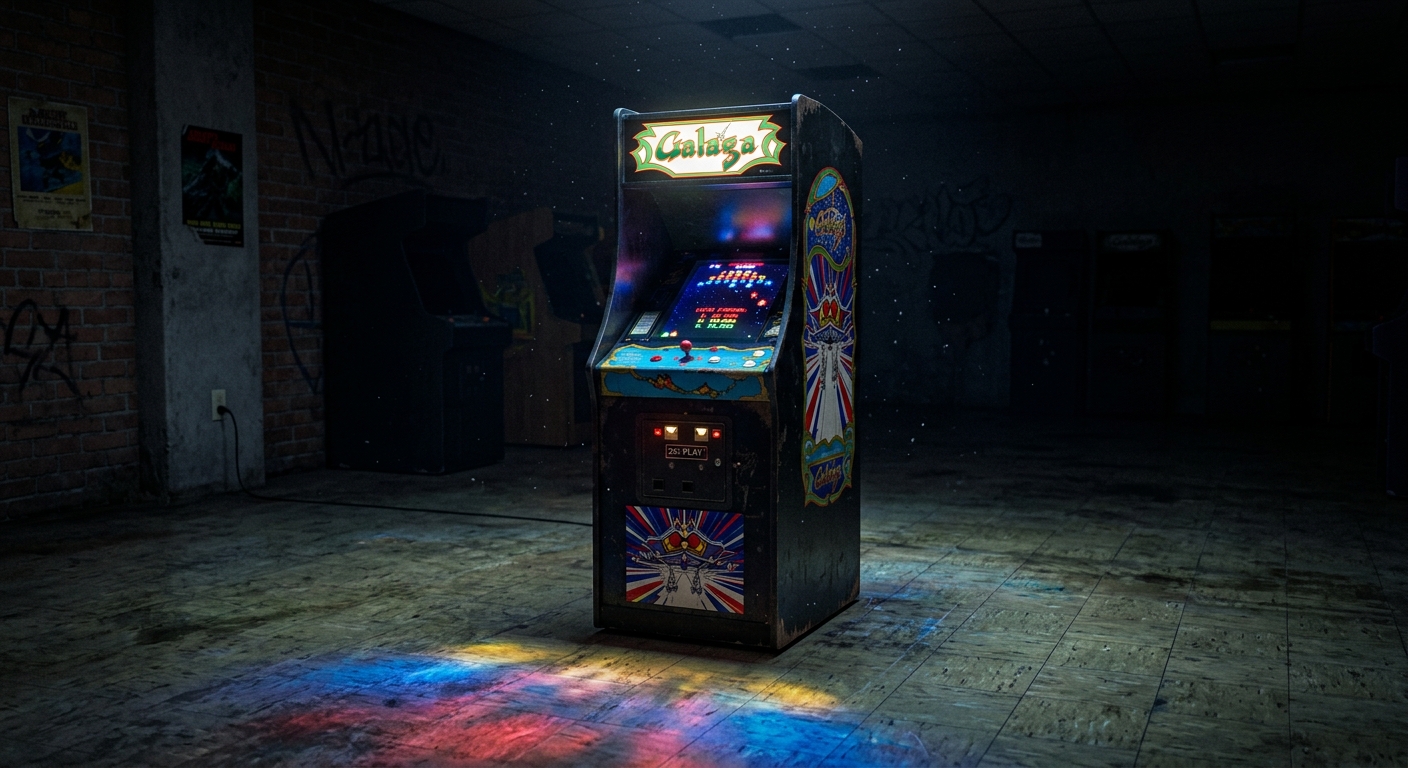
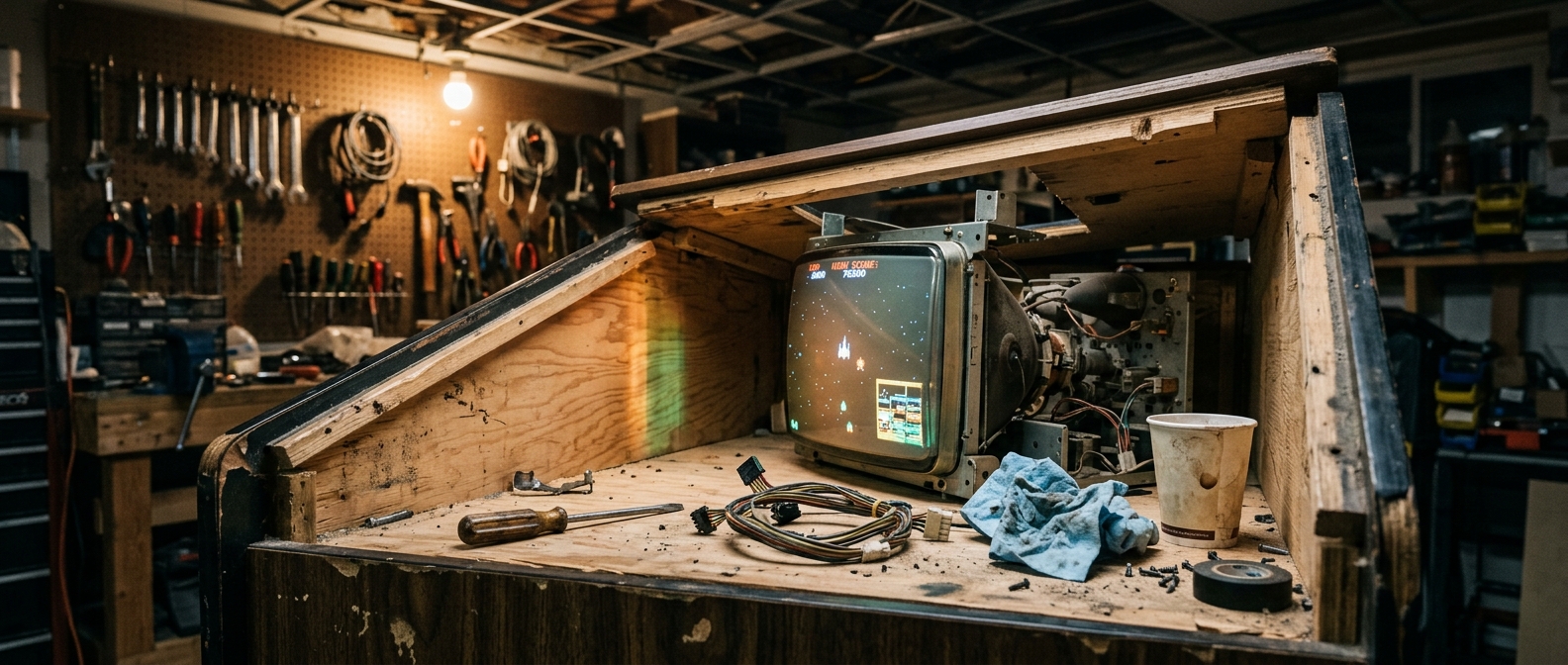
Attract mode was the idle state of an arcade cabinet. When nobody was playing, the machine kept working. Title screens rotated. High-score leaderboards scrolled past initials that meant something to regulars and nothing to strangers. Gameplay footage ran on a loop, usually a scripted replay of an ideal run, the kind of performance no actual paying customer would ever match. The cabinet was always selling itself, even at two in the morning with the lights half-dimmed.
The function was economic before it was aesthetic. Operators paid for floor space by the square foot. A machine that went dark between players was a machine that justified nothing. The attract loop was the closest an inanimate object could come to making eye contact with a potential customer and gesturing at the coin slot. Some cabinets were better at this than others. A handful blurred the line considerably: forum discussions among collectors at the International Arcade Museum document games whose demo states were actually playable, free samples running on an infinite loop until someone fed in a quarter and took over.
The feature was engineered into the hardware identity, not added as decoration. The PC-10 and similar arcade-to-home conversion platforms attempted to preserve attract mode behavior outside the arcade context entirely, which tells you something about how deliberately it had been built into the original machines. You do not spend engineering hours replicating a behavior across hardware generations unless someone considered it essential.
How the Transition to PC Erased It
When arcade properties migrated to home computers through the 1980s and 1990s, attract mode came along in diminished form. Fighting games sometimes ran an AI-versus-AI match on the title screen. Sports games cycled through a short scripted demo. The behavior survived the trip but lost its reason for existing. At home, nobody needed to be lured toward a coin slot. The player had already purchased the software, already sat down in front of the machine, already decided to be there. The loop's core persuasive function collapsed the moment ownership replaced pay-per-play.
PC game launchers finished the job. Steam, GOG, and their predecessors replaced ambient looping presentation with static library tiles and on-demand trailers buried in store pages. The game no longer performed for you in your own home. It waited. The physical context had changed too: a cabinet in a bowling alley competed with noise, foot traffic, and twenty other machines. A PC monitor sits in a private room and goes dark when the user walks away. There is no passerby to attract. The problem the feature solved does not exist in that room.
What replaced attract mode in the home ecosystem was corporate push content. Animated banners on Xbox dashboards. Autoplay clips in Steam's library view. These are not the game running in its idle state. They are platform-level advertising controlled by publishers and storefronts, not the software itself expressing something about what it contains. The authorship shifted, and the texture of the experience shifted with it.
The Emulation Scene Noticed What Everyone Else Forgot
The people who felt the absence most clearly were not mainstream critics or industry commentators. They were hobbyists building home arcade cabinets who discovered, when they went to replicate the physical experience, that they had to deliberately reconstruct a behavior the original hardware produced automatically. The ambient loop did not come standard anymore. It had to be coded back in from scratch.
Attract-Mode, an open-source frontend for emulators including MAME, exists specifically because that gap was felt. The software hides the underlying operating system and is designed to run from a joystick or spin dial, restoring the idle looping presentation for anyone running original ROMs inside a cabinet enclosure. It runs on Linux, Windows, and macOS, including Raspberry Pi builds tucked into custom woodwork. Someone built a whole software project around the problem of making a PC behave like a machine that was finished in 1982.
The granular distinctions that matter to this community, which games are playable in demo state versus which only display scripted replays, would be nearly incomprehensible to someone who had encountered games only through a launcher interface. The International Arcade Museum forums contain threads tracking exactly this distinction across dozens of titles. That level of care is preservation work. It is also, implicitly, a preference statement about what the broader transition discarded without asking anyone first.
Why PC Gamers Don't Miss It and What That Reveals
The absence of complaint is worth examining. PC gaming culture developed entirely outside the arcade economic model. For players who came to the medium through a home computer or console, the attract loop is at most a nostalgic texture, something glimpsed in a pizza restaurant at age eight, not a functional expectation. Nobody is waiting for their Steam library to start performing at them unprompted. The expectation was never there to disappoint.
Modern interface design works against the concept structurally. Menus are optimized for navigation speed. Boot sequences are shortened. The ambient, time-wasting theater of an idle cabinet, its willingness to simply run and be seen, has no place in a UX paradigm built around reducing friction. The goal is to get the user into their chosen activity as quickly as possible. Attract mode was friction by design, the productive kind that turned a bystander into a participant. That job description no longer exists in the home context.
There are two honest conclusions available. One is that attract mode was always inseparable from its hardware and economic context, a precise solution to a problem that home gaming never had, and its disappearance is simply correct. The other is that something was quietly discarded that made games feel less like living things and more like software waiting to be executed. Both conclusions can be true at once. The cabinet did not wait for you. It ran, and it ran, and eventually you walked over. Whether that ritual deserved to survive the coin slot is the question nobody thought to ask until a hobbyist needed a joystick-controlled frontend just to recreate it in their garage.
Sources

Marguerite Osei is a house writer for GamesUnlimited covering classic arcade cabinets, pinball, and the hardware that keeps them running. She spent two decades repairing machines in family arcades before she started writing about them. Her reviews weigh how a game plays against how well it holds up to a thousand quarters.