A first run in a browser game often ends with a resource shortage, a missed cue, or a decision that looked harmless until it wasn’t. That run still has value. It shows how the game behaves before you know its rules, giving you a baseline to compare against on the next attempt. The useful question is not only how far you got. It is which decision changed the outcome.
“Treat the first run as a baseline: record what the game rewarded, what it punished, and when the run began to turn.”
Why the first run is already working for you
Browser games are easy to start and easy to restart. The format includes many kinds of games, from HTML5 titles to .io games, and a quick session can reveal enough of the rules to make a second attempt more deliberate. Browser games have changed across several technical eras, but the practical advantage for a player remains simple: you can often test an idea again without a long setup.
That convenience makes an unplanned first run useful. You meet the controls, the resource flow, and the threats in the order the game presents them. A guide may explain a mechanic, but your run shows what happened when you tried to use it. If you spent the starting currency on an upgrade and then could not afford a defensive option, that is evidence about the cost of the choice, not just a mistake to feel bad about.
Think of the run as a baseline measurement. Note how long you survived, what you had when trouble began, and the earliest moment you can identify as a turning point. Your first theory may be wrong. That is fine. A useful baseline gives the next run something concrete to test.
Track controls, resources, and threats
During the run, watch three layers. First, the input layer: which action felt slow, unclear, or difficult to repeat? Second, the economy: what did you collect, spend, or leave unused? Third, the threat: what enemy, timer, or penalty forced a change in your plan? These layers interact. A control that takes too long to activate can make a resource look weak, while a threat arriving early can make a saving strategy too risky.
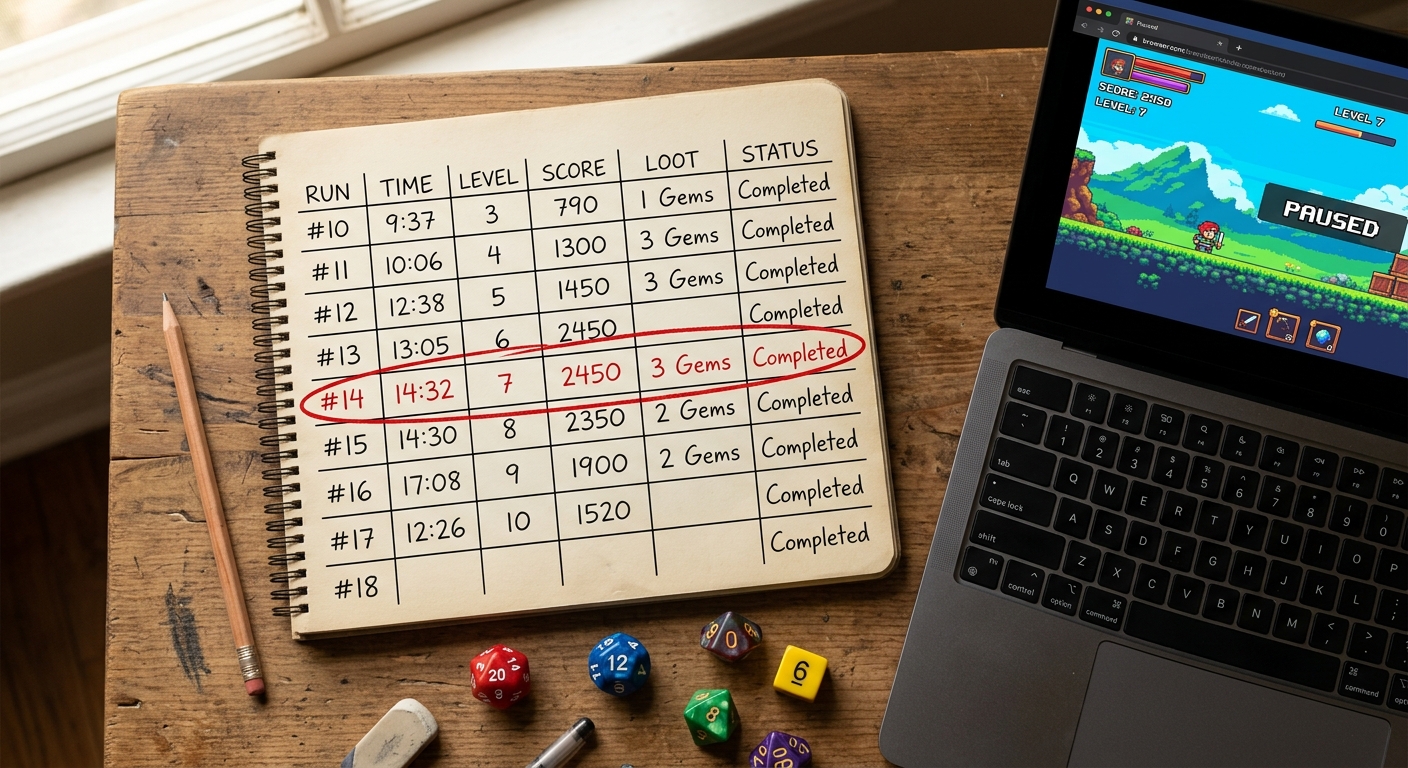
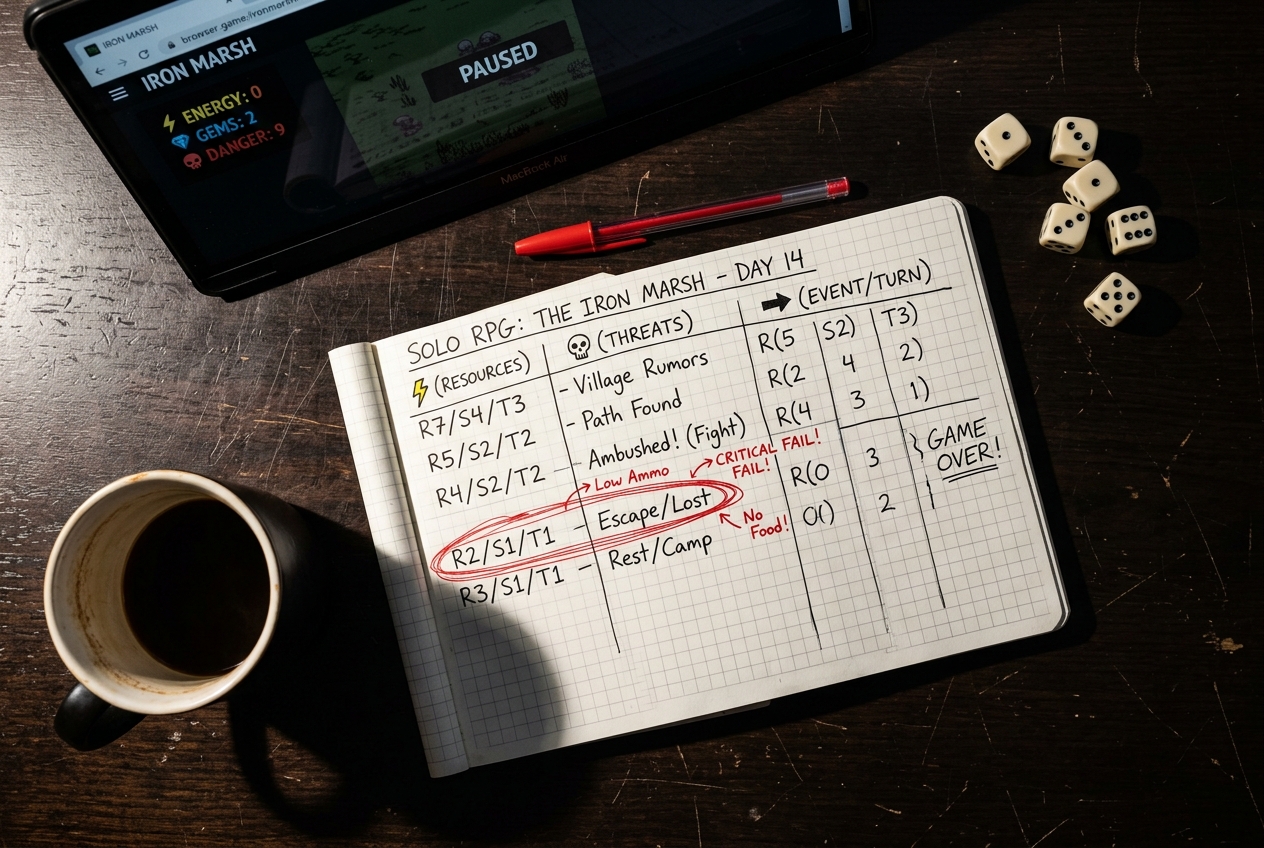
Keep the record small enough to use. A scrap of paper or a note in another tab can hold three columns: “ended the run,” “had too much,” and “never found.” Add concrete entries, such as “ran out of energy while escaping” or “finished with two unused healing items.” Avoid writing only “bad at combat.” That label does not tell you what to change.
Stay with the game long enough to observe the consequence. Looking up a guide as soon as you get stuck can replace your own evidence with someone else’s strategy. If you are unsure what a resource does, test it once when the cost is manageable. If a control seems awkward, repeat the action in a safer moment. The aim is not to ignore help forever. It is to learn enough first-hand detail to ask a better question when you do consult it.
Turn the notes into one test
When the run ends, pause before replaying. Pick the earliest decision that may have changed the result. If you identify only the final mistake, you may miss the earlier choice that left you exposed. For example, the last hit may have ended the run, but spending your only defensive resource two minutes earlier could have made that hit unavoidable.
Then write one hypothesis for the next attempt. Keep it narrow: “For the first two minutes, I will save the blue resource and see if that gives me a longer escape window.” This gives the run a clear comparison. If you also change your route, upgrade, and combat style, you will not know which change mattered.
After the test, compare the outcome with the baseline. Did you survive longer? Did the resource remain useful, or did holding it leave you weaker at a more important point? A result that disproves your idea still improves your model of the game. Record the outcome, including the detail that surprised you, and choose the next test from what actually happened.
Make short sessions add up
A compact session can have three parts: one exploratory run, two or three runs that test a single idea, and one final run where you play normally. The exploratory run gathers information. The controlled attempts isolate a choice. The last run checks whether the adjustment still works when you are no longer narrating each move to yourself.
Keep dates or version notes with your observations if you return after an update. A balance change can alter resource costs, enemy pressure, or the value of an upgrade. If an old strategy stops working, compare the game’s current behavior with your earlier record before assuming your execution has slipped. The rules may have shifted.
Over several sessions, your notes become a personal strategy guide built from your own decisions and results. Keep the useful parts: reliable openings, resource thresholds, and the threat that most often changes your plan. Drop advice that no longer matches the game. The test is practical: each session should leave you with one clearer relationship between choice and consequence. That is enough to turn a chaotic first run into the start of a repeatable practice loop.
Sources
- Important Tips for Building Your First Game
- Browser game - Wikipedia
- Short Browser Games: Browser Games To Play | Gameer
- 25 Best Browser Games You Can Play Instantly Without Installing Anything - AvandaGame
- Beginner’s Guide to Online Gaming | Tips to Get Started
- Run 3 - Play Online at Coolmath Games
- Play Run 1 Online
- Make Browser Games Faster On Low-End PCs | 9MinGames

Jonah Bell is a house writer for GamesUnlimited who covers strategy games, simulation design, and player economies. He follows systems from tutorial to endgame, testing how patches reshape the choices players make.