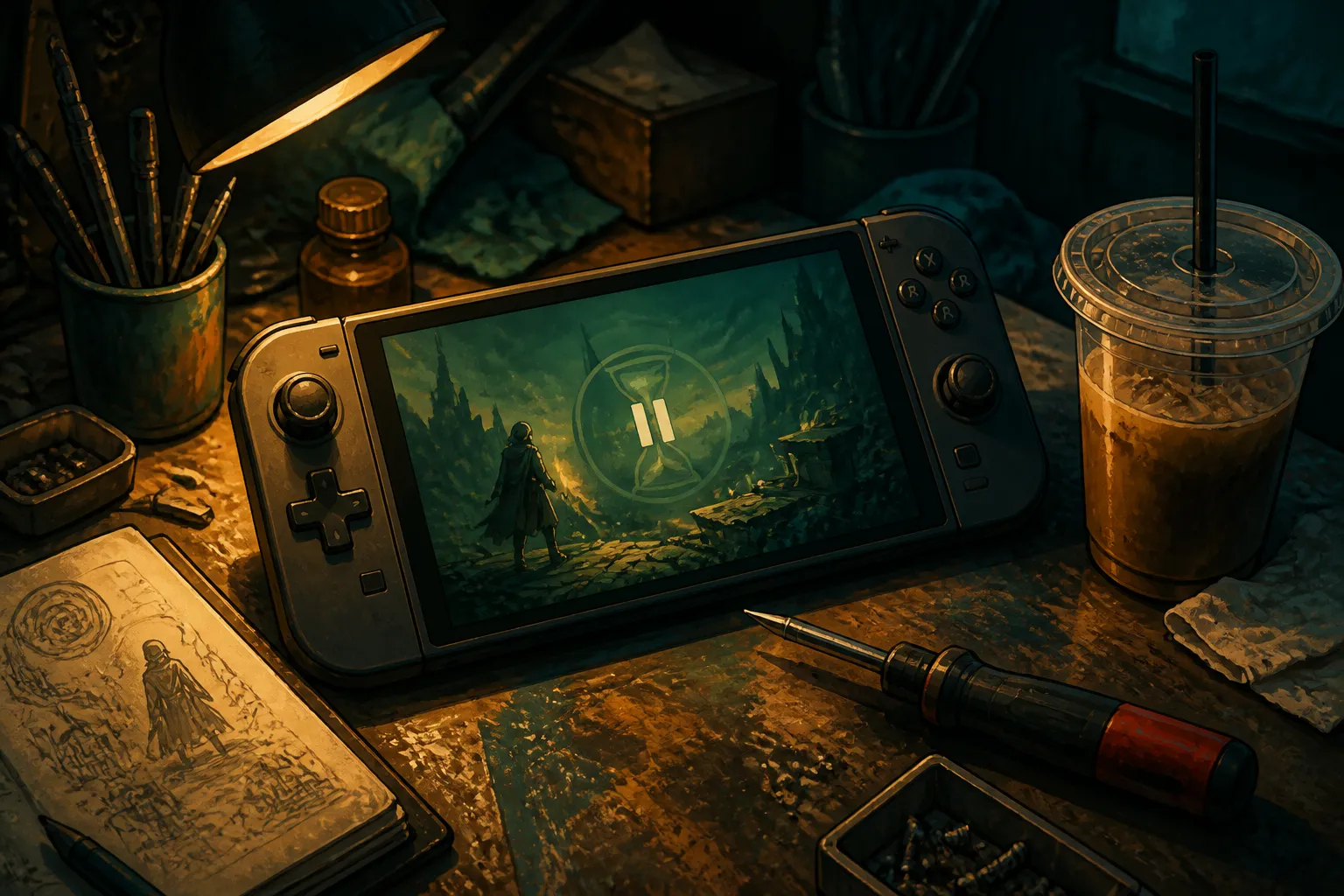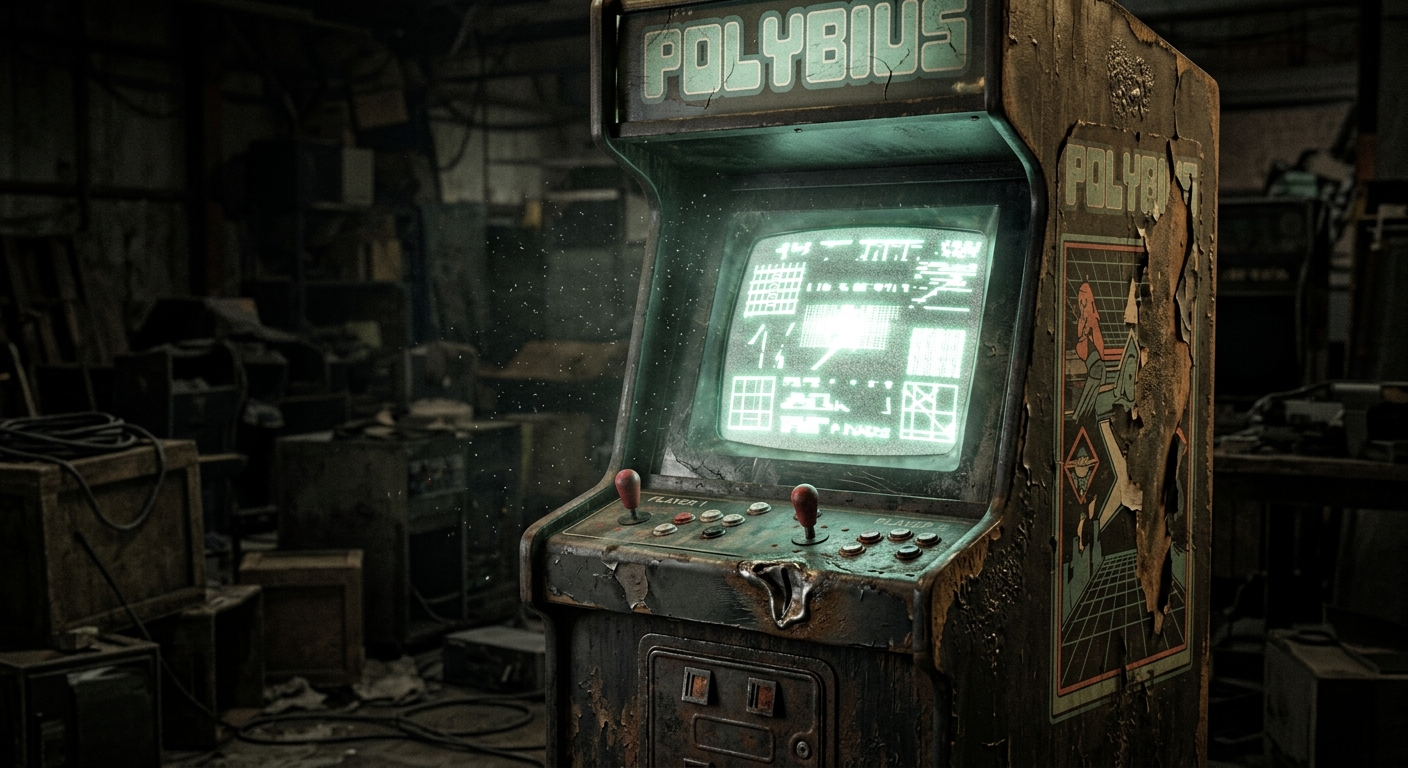
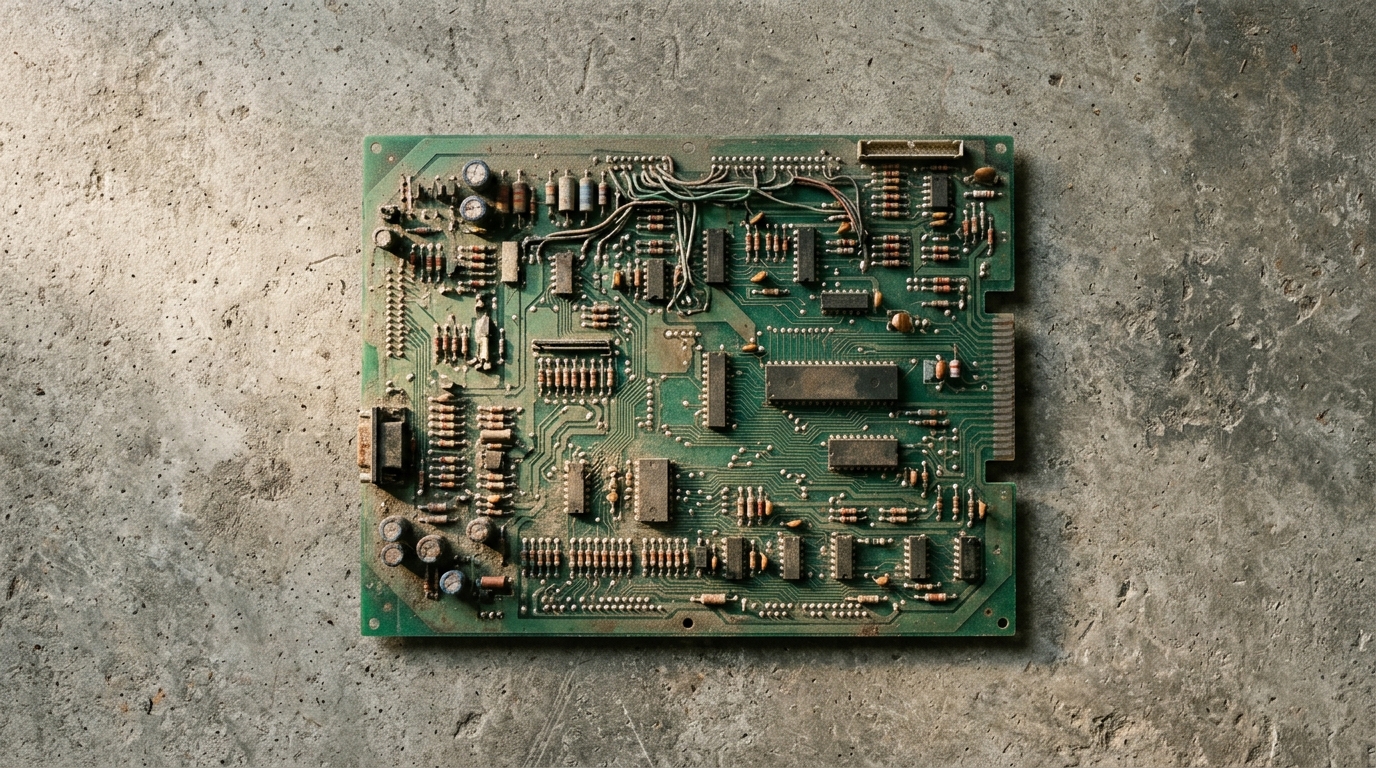
There is a particular kind of arcade machine that repair technicians learn to recognize on sight. The monitor is on. The game is running. Something is wrong, and the something is not a loose connector or a dead capacitor. The board itself has been cooked by heat, or time, or both, and whatever logic once governed the machine's behavior has partially dissolved. The game still plays. It just plays by different rules than the ones printed on the marquee. Void Stranger, the solo-developed puzzle game from System Erasure, is the first piece of consumer software I have encountered that appears to have arrived in this condition on purpose.
A Cabinet That Doesn't Want You to Win
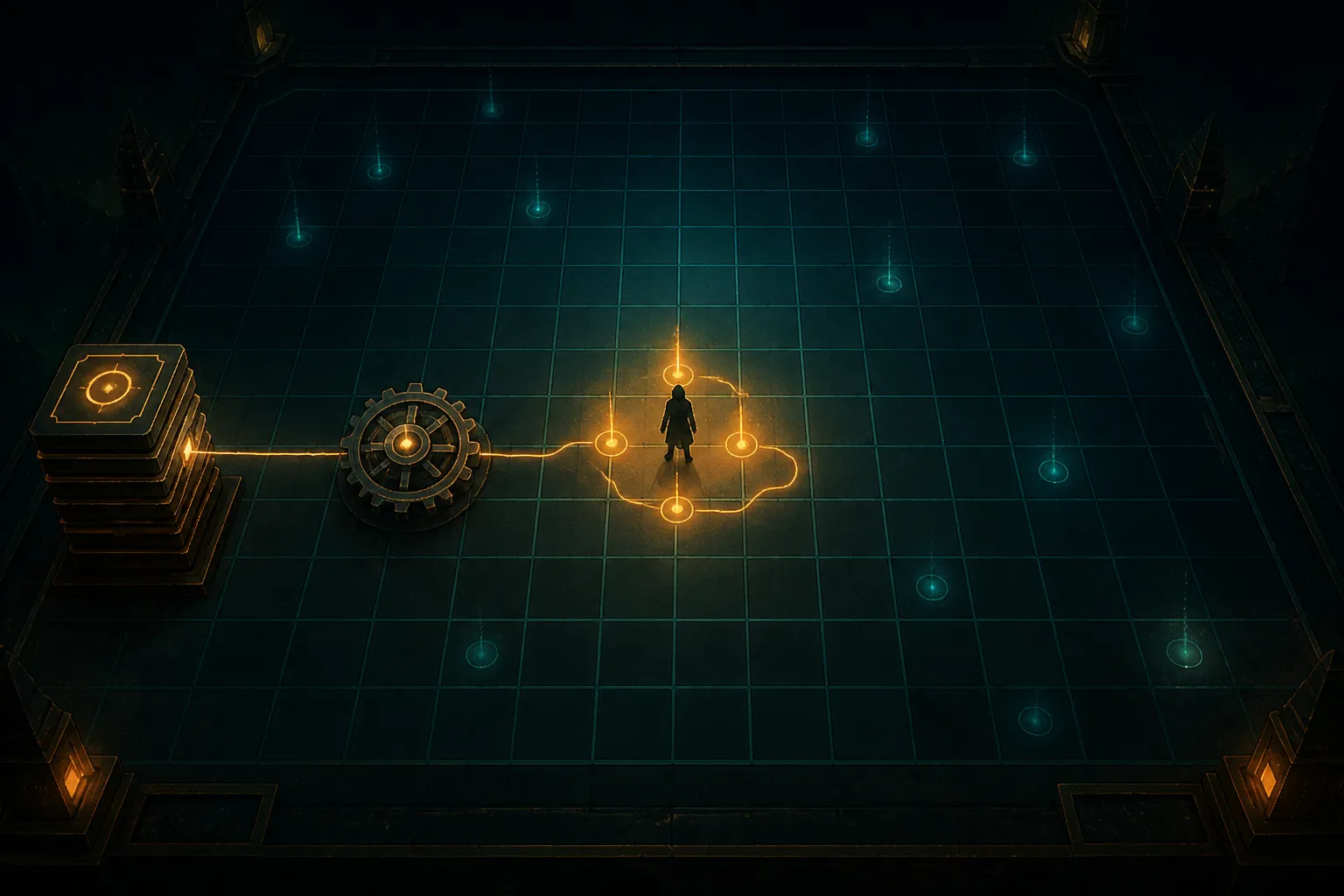
On the surface, Void Stranger is a Sokoban-style block-pusher. Push things, reach the exit, descend to the next floor. The first several floors do nothing to contradict this description. Then the game begins quietly removing its own instruction placard, one sentence at a time, until you are standing in front of a running machine with no documentation and a coin slot that occasionally swallows your quarter for no reason it will ever explain.
This is not an accident of scope or a tutorial that ran short of budget. System Erasure has stated openly that the game was designed to resist datamining and guide-following. The barrier between the player and comprehension is structural, not incidental. It is load-bearing noise. A physically damaged PCB produces behavior that is technically consistent but feels arbitrary to anyone standing in front of it, and that is precisely the register Void Stranger operates in. The picture is there. The signal degradation is part of the picture.
Beneath the block-pushing surface is a lattice of hidden mechanics, secret inputs, and progress-erasing consequences that the game never announces. It does not apologize for them either. It simply proceeds, the way a malfunctioning cabinet proceeds, indifferent to whether the person feeding quarters into it has any idea what is happening.
Repetition as Ritual, Punishment as Pedagogy
Most contemporary puzzle games treat failure gently. Reset a room. Rewind a handful of moves. Keep the player close to the moment of error so they can correct and continue. Void Stranger does not do this. When you make a consequential mistake, the game asks you to replay enormous stretches of content to return to the point where things went wrong. Floors you have already solved. Sequences you have already memorized. Ground you have already covered, again, in full.
In any other context this would be punitive. Here it reads as almost liturgical. The rhythm maps precisely onto the experience of feeding quarters into a machine whose pattern logic you have not yet internalized. You are not being tutored. You are being trained through suffering, the same way an arcade loop trains muscle memory by making you replay the sections you failed until your hands know the answer before your brain does.
The currency of progress in Void Stranger is endurance. The willingness to sit with confusion. The willingness to replay known territory while waiting for understanding to arrive, which it sometimes does dozens of hours after the relevant information was first encountered. The Hardcore Gamer review published in September 2023 noted that the difficulty is not miscalibrated but appears to be the thesis itself. The game is making an argument about what it means to persist against a system that actively resists you, and that argument is most legible to players who already know what it is to lose to a machine that cannot be reasoned with.
Secrets That Predate the Internet's Ability to Find Them
After Void Stranger launched, the community spent months unsure whether certain content existed at all. Not hidden in the sense of a locked bonus stage behind a password. Hidden in the sense that the urban mythology surrounding 1980s arcade cabinets was hidden, the persistent rumors of a stage no one had reached, a character no one had unlocked, a screen that only appeared if you played for six consecutive hours without dying. The rumors were not always true. Sometimes they were. You had to go find out yourself because no one who had seen it could prove it.
Void Stranger encodes information in visual and audio layers that are easy to miss across a single playthrough. Secrets function less like Easter eggs and more like things you have to have already seen in order to recognize that you are currently seeing them. This is the logic of an arcade machine that communicates its advanced states only to the people who have already spent enough time in front of it to deserve them. The machine does not meet you halfway. You accumulate the context required to read it, or you do not.
Players divide cleanly on this. Those who find it rewarding describe discovery in almost archaeological terms, brushing sediment off something that was always present. Those who find it alienating use the same language people use for hardware failure. Something is wrong with this. Something was broken before I got here. Both descriptions are accurate. That is the design.
The Aesthetics of Intentional Damage
The visual language of Void Stranger, monochrome sprites, scanline effects that sit just adjacent to CRT output, tile sets that reference EGA-era hardware, is doing functional work, not nostalgic cosplay. The aesthetic of a damaged or aged arcade screen already primes a viewer to expect information loss. Artifact versus signal becomes an open question. You accept that some of what you are seeing may not be complete, because screens like this have never shown you everything cleanly.
The sound design operates in the same register. Tones and loops that feel as though they are coming through a speaker cone that is slightly blown. Not unpleasant, but not clean. The sonic equivalent of a monitor whose phosphor has started to ghost images a frame behind. This is deliberate calibration. The game wants you in a state of mild uncertainty about the reliability of your own perception before it starts using that uncertainty against you.
Together, the visual and audio design do not simulate a broken PCB so much as they simulate the experiential state of playing one. The slight suspicion that the anomaly you just noticed might be intentional. The question of whether that flicker was a puzzle element or a rendering error. The productive paranoia about whether taking notes is useful or whether taking notes is exactly what the game wants to catch you doing. That loop, the uncertainty about whether your methodology is correct, is the emotional core of the whole experience. System Erasure built a machine that behaves like it has been damaged. The damage is the feature. I have spent twenty years repairing cabinets, and I have never had one argue back at me. This one does.
Sources
- Review: Void Stranger
- How Void Stranger rethinks hardcore puzzlers
- Question about game design :: Void Stranger General Discussions
- Void Stranger - Wikipedia
- A seemingly innocent puzzle game is hiding what might be the most subversive, fourth-wall-breaking adventure since Undertale | PC Gamer
- You should play Void Stranger - worldsbe.st
- Void Stranger: The Sokoban’s Heart Laid Bare - by Kastel
- Mystery Trackers - Wikipedia

Marguerite Osei is a house writer for GamesUnlimited covering classic arcade cabinets, pinball, and the hardware that keeps them running. She spent two decades repairing machines in family arcades before she started writing about them. Her reviews weigh how a game plays against how well it holds up to a thousand quarters.