A free retry looks like a tiny design choice. One button, one more round, no payment prompt. But that button changes what failure costs. A lost attempt can be followed at once by another, without the pause that might have ended the session. The sources behind this piece do not study retries, so nothing here claims that free retries change player behavior. What follows is an audit of the screen that sits between rounds, built on the one body of published guidance that does apply: the FTC's work on dark patterns.
A retry can be free in money and still be worth checking for pressure, confusion, or a hidden cost.
The screen after you lose
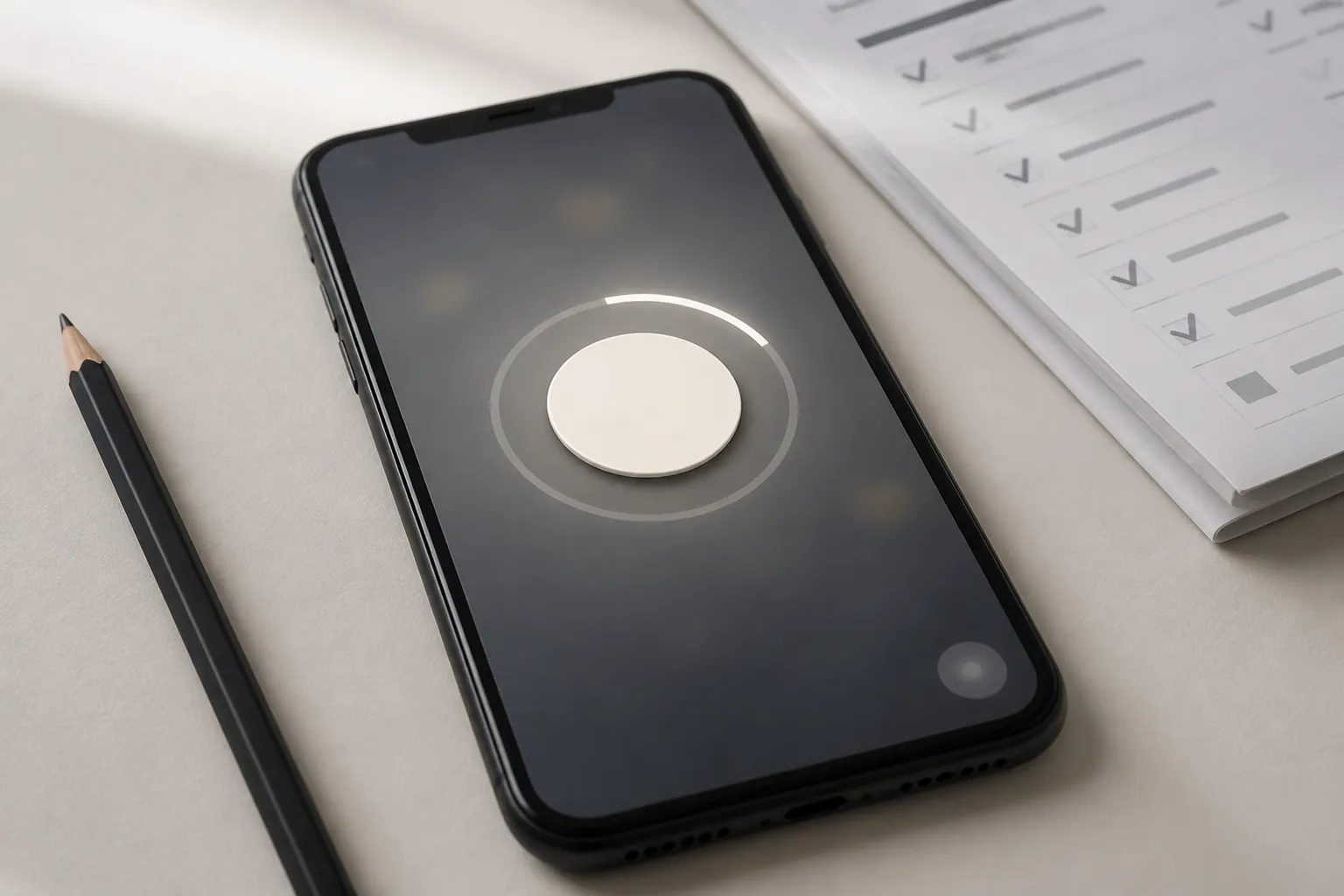
In an arcade loop, failure usually ends a round, not the player's access to the game. An instant retry shrinks the gap between those two states. That is the whole mechanic. The interesting part is what else rides along with it. Does the player simply start another free attempt? Or does the screen add a countdown, an ad, a purchase offer, or a request for information?
Those are separate design properties. A game can be generous with retries and still give a clear way out. It can also make the next attempt feel urgent and hide the alternative. Treating every replay button as harmful goes past the evidence. Treating the word "free" as proof that everything around it is harmless goes past it too.
One practical point for anyone reviewing a quick-play game: look at the game-over screen as its own piece of design. It is the moment the player decides whether to continue, and it gets less scrutiny than the menu or the checkout.
What the dark-pattern research gives us
Harry Brignull coined "dark pattern" in 2010 for design that tricks or manipulates people into choices they would not otherwise make. The FTC's 2022 report, "Bringing Dark Patterns to Light" as discussed in the Science and Technology Law Review, sorts examples into four groups: designs that create false beliefs, conceal important information, cause unauthorized charges, or obscure and manipulate privacy choices. The link here goes to a law review blog that covers the report, not to the report itself.
The FTC treats dark patterns as potentially unfair or deceptive under Section 5 of the FTC Act. That is a consumer-protection frame for commercial conduct. It is not a finding about free browser retries, and it says nothing about their psychological effects. The FTC's gaming page is mostly navigation and adds no guidance on retry screens.
So the categories work best as questions, not verdicts. Could the prompt mislead about what the next click does? Is a cost or condition hidden? Could a button trigger a purchase the player did not intend? Does the screen steer a privacy choice toward more data collection? A yes calls for a closer look. It does not settle anything on its own.
Four checks for a replay prompt
These checks are drawn from the FTC's red flags. They are not a published test of retry screens.
- Urgency. Is there a countdown with no clear reason to decide fast?
- The exit. Is "leave" or "back" as easy to see as "play again"?
- Hidden transactions. Does the loop carry a purchase or data request?
- Buried conditions. If the retry has limits, are they stated at the moment of choice?
Start with urgency. The FTC report names countdown timers that imply a limited-time offer as a red flag. A timer next to "play again" deserves a second look if nothing explains why the player must hurry. A timer alone does not prove manipulation. Its wording and purpose matter.
Then the exit. The FTC's account of the Fortnite case says confusing button placement allowed charges with a single press, while the cancel-purchase button was moved, shrunk, and put behind a lengthy process. In a 2023 settlement the FTC ordered Epic Games to refund $245 million to Fortnite customers. That case was about purchases, not free retries. What it offers an audit is a concrete habit: check where each button leads and how hard it is to back out.
Next, transactions and data. The report flags in-app purchases disguised as gameplay, especially in games aimed at children. It also flags privacy choices that stress the option collecting more data and play down the one that limits it. The sources do not say whether any particular retry is tied to purchases, ads, or data collection. Check the actual screen.
Last, the fine print. The report lists important product limits buried in long terms documents as a warning sign. If a retry is called free but depends on a condition, the player should be able to read that condition where the choice is made.
What this does and does not show
The gaps are plain. No source here covers free retries, replay behavior, or browser-game monetization. None tests safeguards or links retry mechanics to harm. The material is American, so it does not say how other countries would treat a design. The Fortnite account available to us is cut off, which limits what can be said about the full settlement.
Gambling regulators have studied fast loops in a different setting. The UK Gambling Commission says players need to understand product traits such as volatility and return to player, and links poorer understanding with higher risk of harm. That concerns gambling products. It does not show that a retry button in a non-gambling arcade game carries the same risk, so this piece does not build on it.
What remains is modest and usable. A free retry can make failure less final and keep a short game moving. Whether it changes how people play is an open question. The screen between rounds is still a place where a cost, a choice, or the way out can get lost, and it takes about ten seconds to check.
Sources

Jonah Bell is a house writer for GamesUnlimited who covers strategy games, simulation design, and player economies. He follows systems from tutorial to endgame, testing how patches reshape the choices players make.