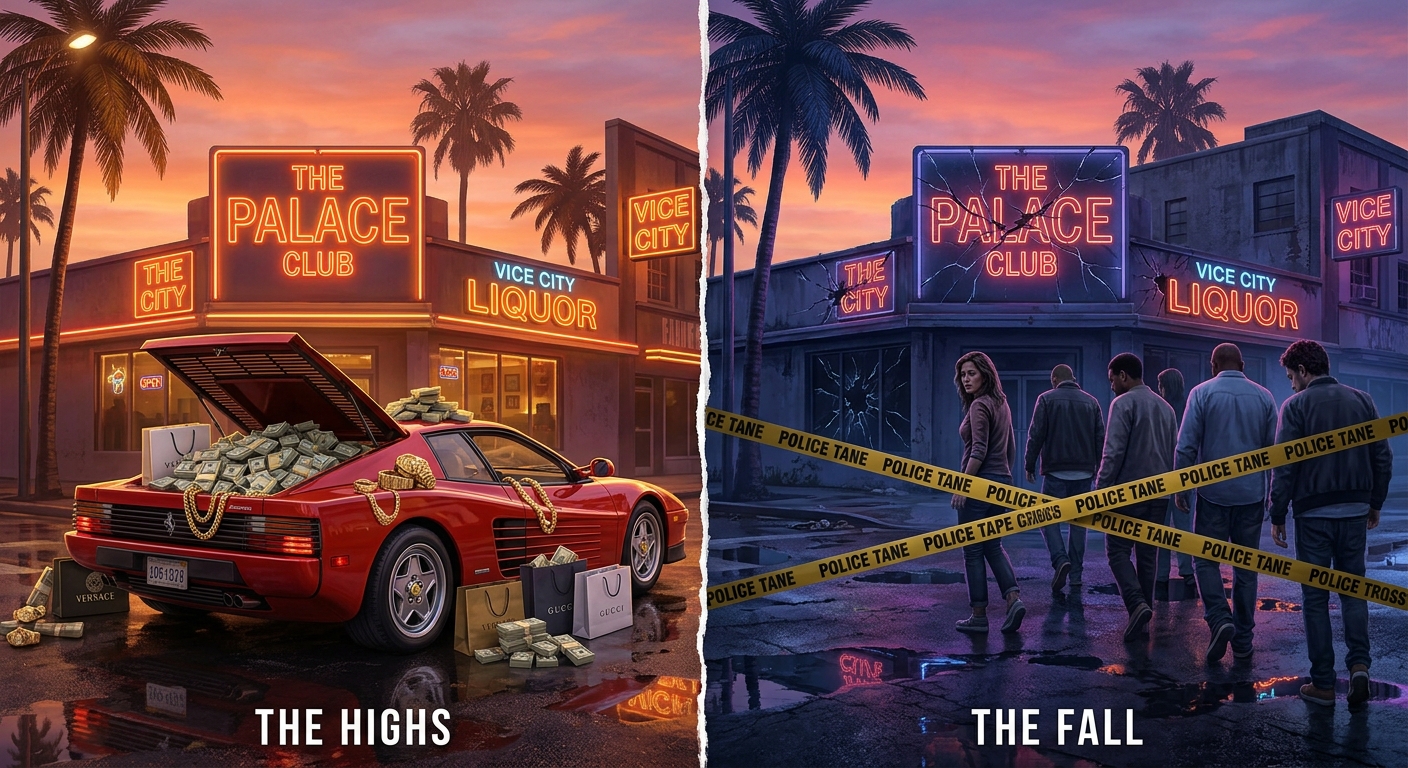
Grand Theft Auto has trained players to read money as a measure of agency. Cash buys equipment, vehicles, property, and, in some modes, a faster route past routine obstacles. That makes one question about GTA VI more revealing than a map-size comparison: what, if anything, will remain outside the player’s purchasing power?
A world built to resist the wallet
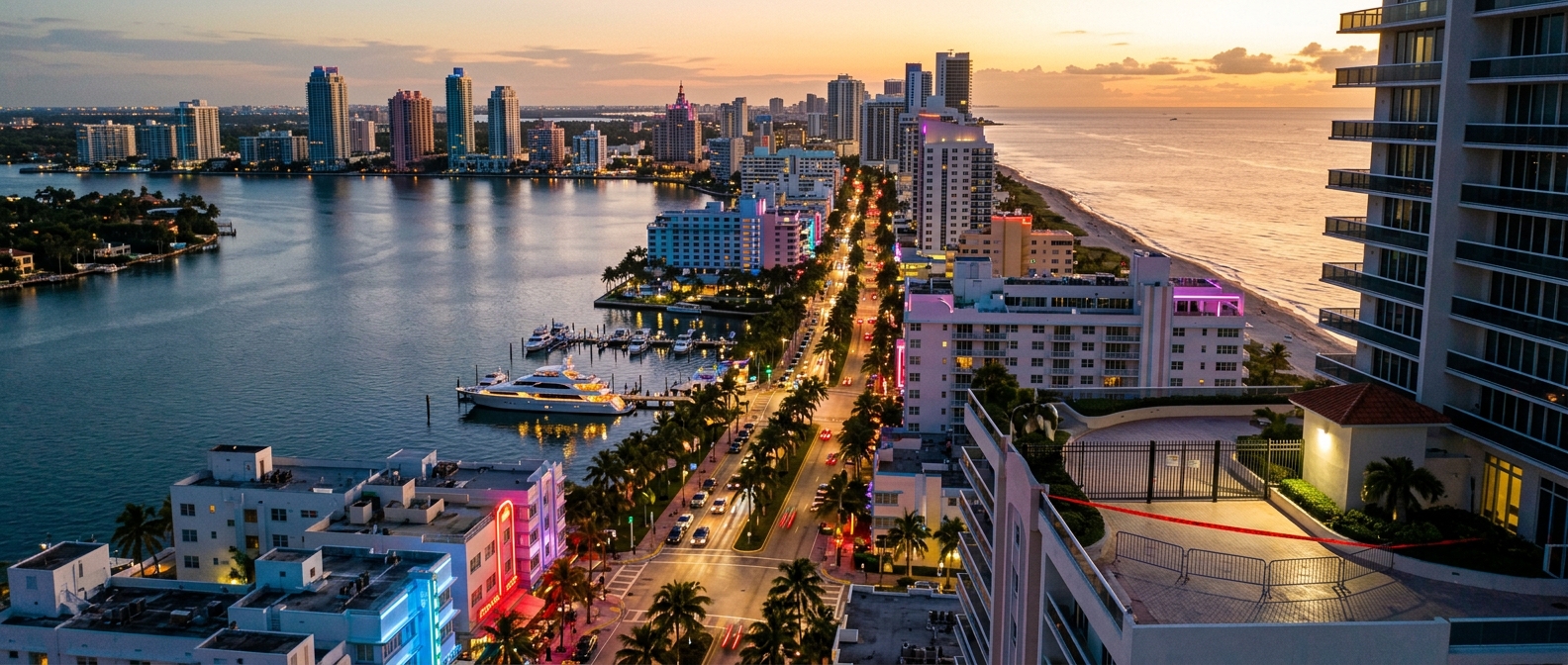
Recent coverage points toward a more interactive Vice City. OpenCritic’s report, republishing Game Rant’s account of Rockstar’s open-world details, describes a place intended to feel active rather than static. That is a useful signal about ambition. It is not proof that the game contains any particular reputation system, neighborhood economy, or persistent law-enforcement model.
That distinction matters. A reactive world can mean more animation and environmental detail, or it can mean systems that keep track of what the player has done and respond later. The second version has sharper consequences for an economy. If a district remembers a disruption, or a character responds differently after a past decision, a big bank balance may not be enough to reset the situation. For now, those are design possibilities, not confirmed features.
GTA’s familiar transaction loop still provides the baseline. Money is a legible reward: complete work, gain cash, buy a thing that changes what you can do. The loop works because its exchange rate is easy to understand. A move toward persistent social or environmental consequences would add another kind of progression, one that may depend on access, timing, or trust rather than a price tag.
Vice City as a pressure system
For an economy model, the key question is not how many purchasable objects the map contains. It is how many variables money can actually move. If cash opens one route but leaves other conditions untouched, then wealth becomes a strong tool with boundaries. That can make choices feel more specific: the player has resources, but still needs to read the situation.
Take a hypothetical district where residents, businesses, or authorities react to repeated player behavior. If those responses persist, the player could face a cost that is not simply a bill. A purchase might replace damaged equipment, but it would not necessarily restore a relationship or erase attention from the police. This is the kind of separation that could give a city continuity across missions. It is not among the specific systems established by the cited reports, so the distinction is a test for the game, not a feature claim.
That test also clarifies what “freedom” means. If every barrier can be removed with enough cash, the player has freedom through accumulation. If some barriers require different actions, freedom becomes a matter of choosing among imperfect options. The latter can make a world feel less compliant, provided its rules remain visible enough for players to plan around them.
The design risk hidden in the promise
Non-monetary progression has a high information cost. Players can usually see a price and decide whether an item is worth saving for. They have a harder time judging an invisible meter, a relationship state, or a consequence whose cause appeared several missions earlier. If the game gives no reliable feedback, resistance feels like a bug in the economy rather than a deliberate limit on it.
Rockstar would need to make those systems readable through consequences, not just explanations. A closed opportunity should have a discoverable cause. A changed response should follow from an action the player could reasonably connect to it. This does not mean every outcome needs a meter or a pop-up. It means players need enough feedback to revise their behavior instead of guessing at hidden rules.
The available GamesRadar overview of what is known about GTA 6 is a useful running reference, while the OpenCritic account of the open-world details frames the reported ambition around interactivity. Neither, in the material available here, confirms the deeper economic and social systems imagined above. That gap is important: anticipation can identify the question, but it cannot answer it for the game.
The consequence for open-world design
GTA VI will be watched as a reference point for the genre, but its influence will depend on what players can understand and use, not just what the world simulates behind the scenes. A system that blocks a cash shortcut could make the city feel more coherent. The same system could feel arbitrary if players cannot tell what changed or why.
There is also a pacing trade-off. Purchases deliver quick, tangible progress. Persistent consequences ask players to carry state from one activity into another, which can make each choice heavier but also slow the reward loop. A successful design would let money matter often, while giving other forms of progress enough clarity to compete with it.
So the open-world question is not whether Vice City will be large, busy, or full of things to buy. It is whether its systems can make wealth powerful without making it universal. If money opens a door but cannot repair every consequence, that limit needs to produce a visible change in play. Until Rockstar demonstrates how those rules work, the most interesting economy in GTA VI remains a question, not a confirmed feature.
Please seek a professional. This article is general information, not financial, tax or insurance advice. Please seek a licensed financial, tax or insurance professional about your own situation.
Sources

Jonah Bell is a house writer for GamesUnlimited who covers strategy games, simulation design, and player economies. He follows systems from tutorial to endgame, testing how patches reshape the choices players make.