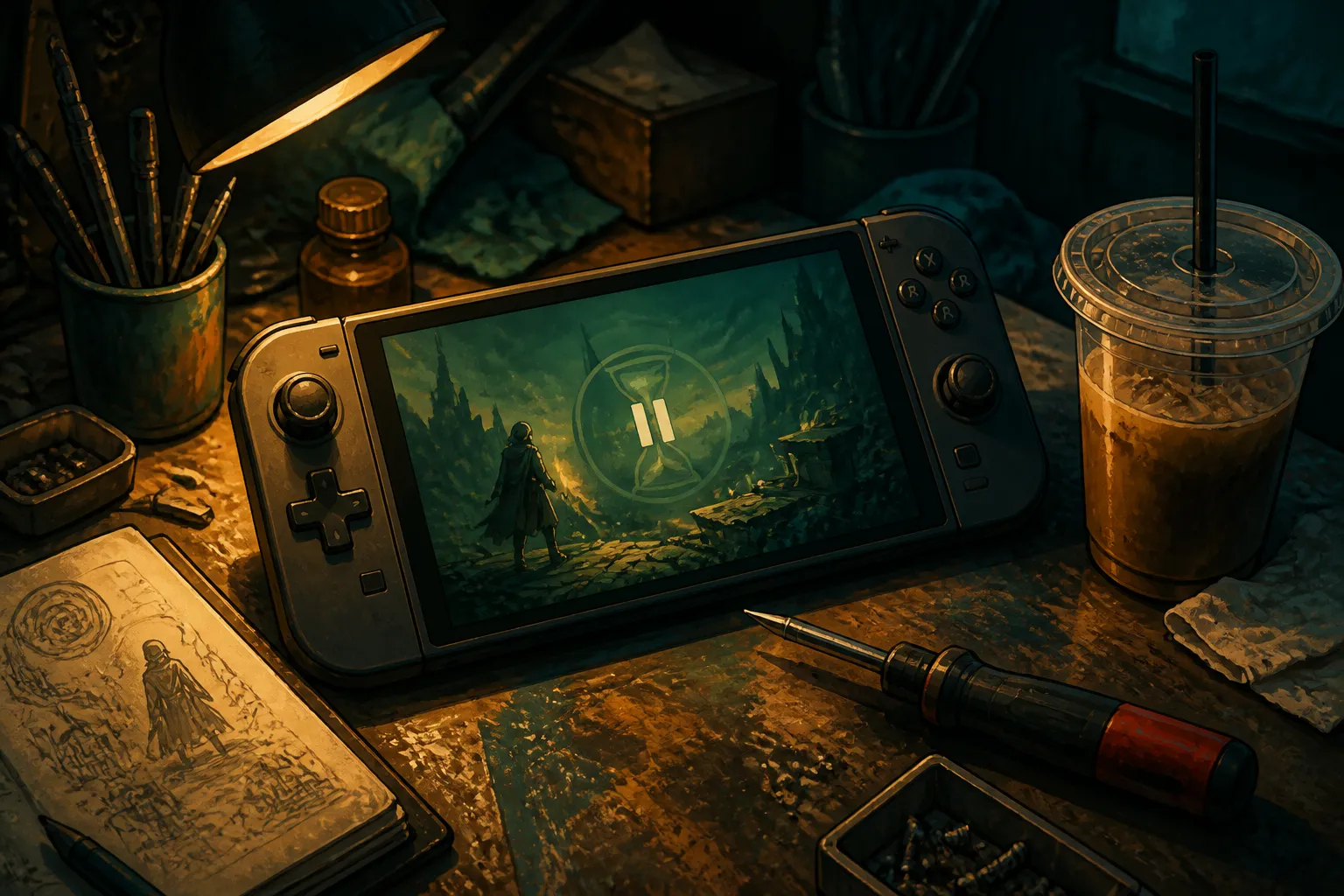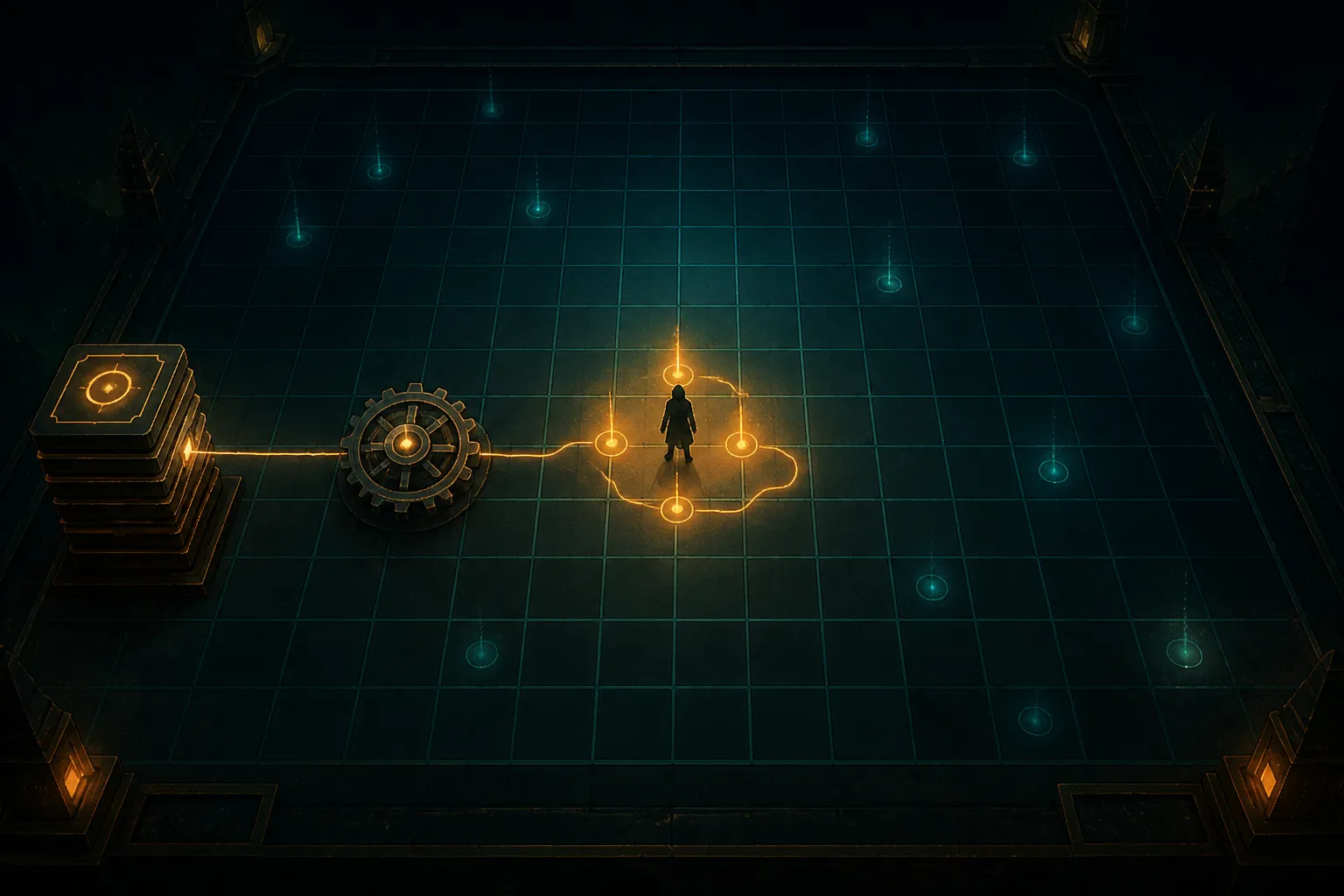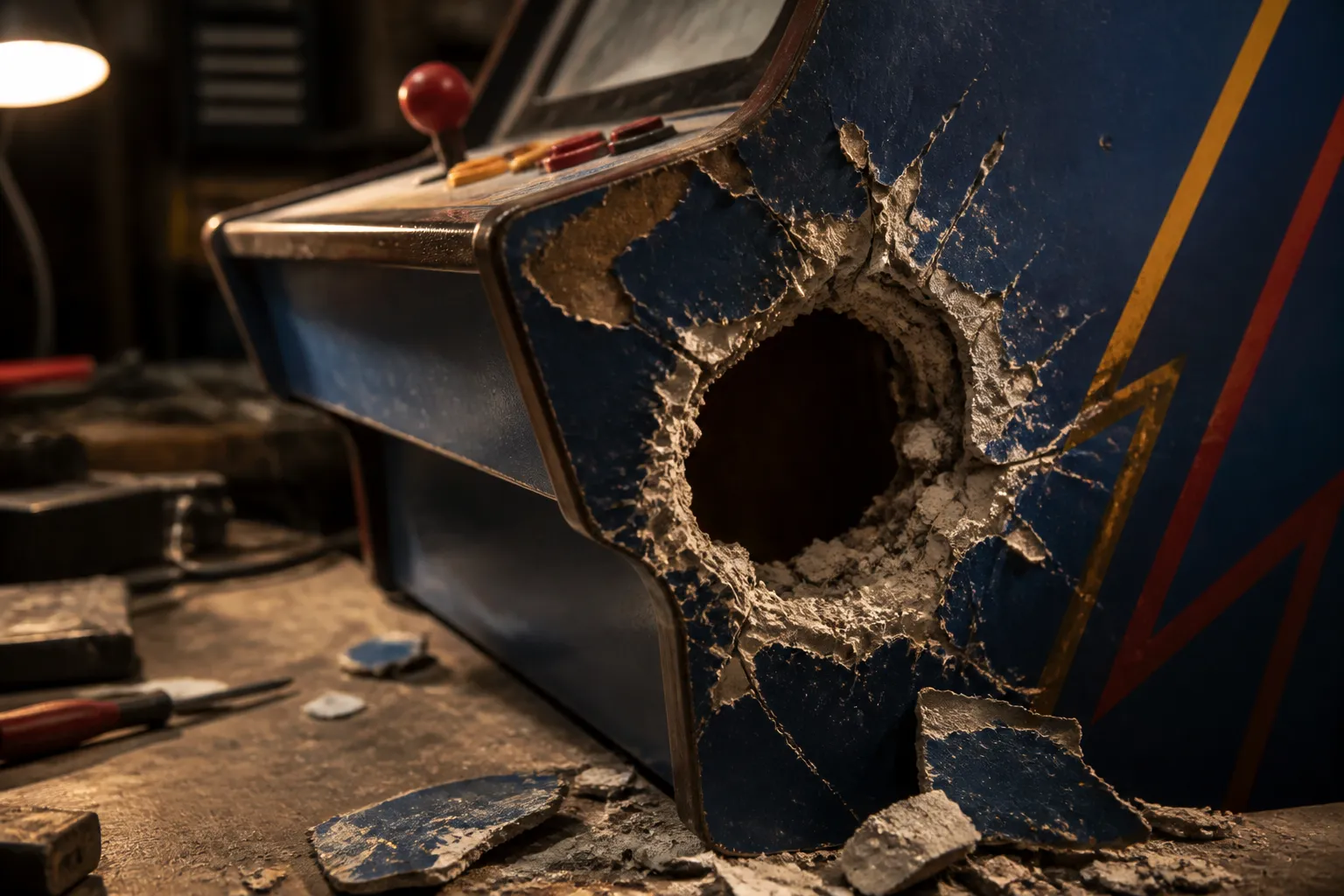
I spent twenty years fixing machines that people hit. Joysticks, buttons, the occasional cabinet side. Nobody ever asked me what stayed standing after an hour. They asked what was still bolted down after a weekend. Donkey Kong Bananza asks the same question about a world made of dirt, and the sources give a partial answer.
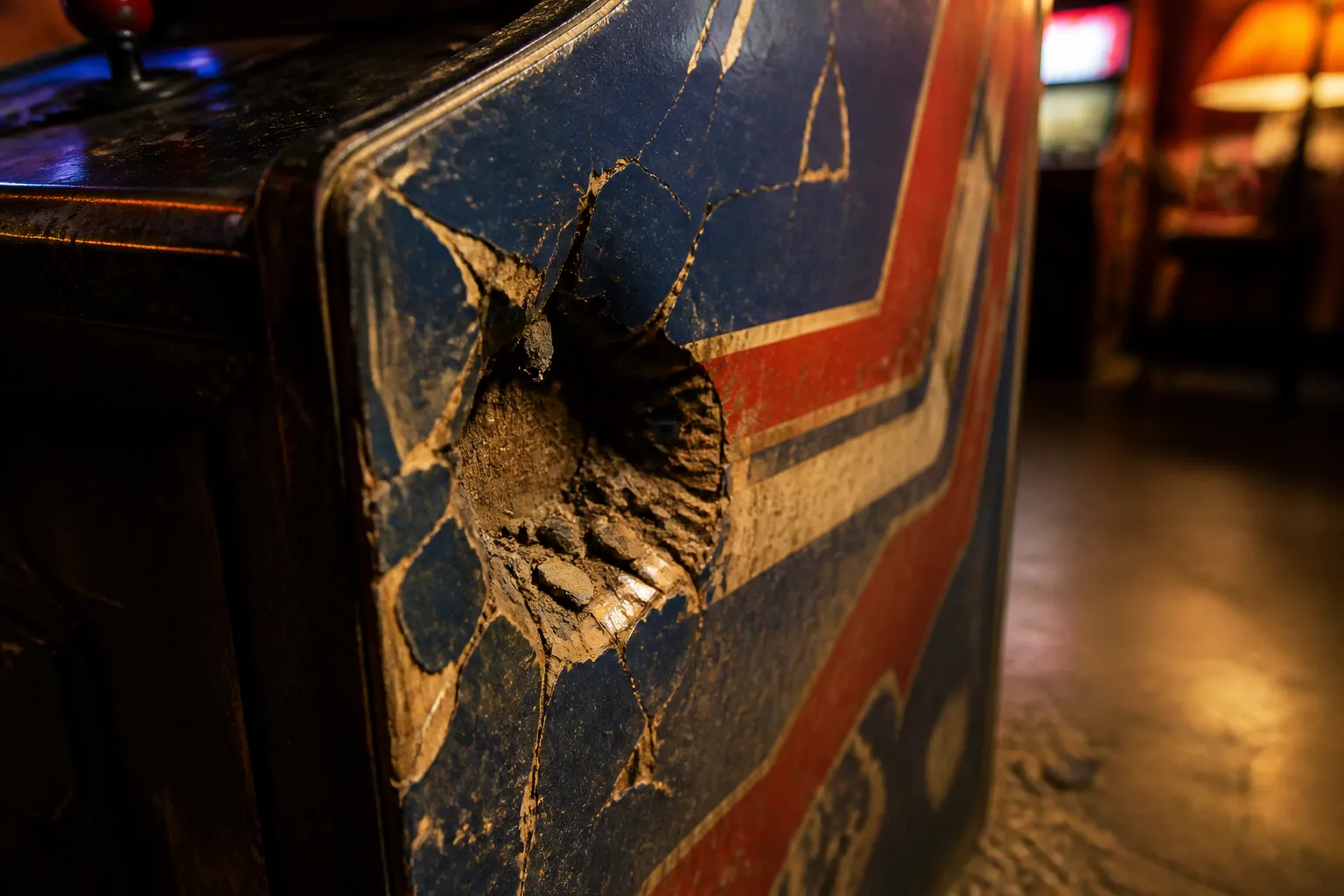
The pitch is smashing
Bananza is a 2025 Nintendo EPD platformer for the Switch 2, released July 17. You play Donkey Kong, who travels toward the planetary core with the teenage Pauline. Most of the terrain can be destroyed. You punch a path, dig for items, and collect banana-shaped diamonds to upgrade Donkey Kong's abilities. [2]
At a GDC 2026 panel, producer Kenta Motokura and programmer Tatsuya Kurihara walked through the destruction design. Nintendo said it believes "it is more fun to destroy that which is beautiful." I have heard worse mission statements from cabinet distributors. [1]
Voxels, by the hundred million
The tech traces back to Super Mario Odyssey, where some levels let players push terrain around with voxels. Bananza leans on the idea much harder, with an emphasis on large destructible worlds. [2]
The numbers are big. Nintendo placed hundreds of millions of voxels into at least one layer, and the headline of IGN's GDC coverage puts one layer at more than 340 million. [1] That is a lot of dirt to keep track of.
The project also began on the original Switch and shifted to the Switch 2 because of technical constraints. [2] The sources do not say more than that, so I will not read too much into it. Two other Game Developer pieces cover the voxel gameplay loop and the game's asset recycling. I have not drawn on them here. [3][5]
What stays standing
Here the sources do help. The destruction is built around a framework of unbreakable material, often metal girders that recall the backdrops of the original Donkey Kong. The level cannot be completely flattened. [7]
So part of the answer is simple. Some things stay up no matter how long you swing. The girders are the cabinet frame, and the dirt is the paint. You can wreck the surface for an hour, but the skeleton holds.
What the sources do not tell me is whether a hole you punch stays a hole after you leave and come back. They do not say how the terrain system behaves over a long session. They give no frame rate or load time data for the Switch 2 either. [1][2][7][8]
A spec sheet and behavior at hour three are different documents. A coin mechanism can pass inspection and still jam on the four hundredth quarter. Bananza may be perfectly tidy. I just have no paperwork saying so.
How the destruction holds up for reviewers
Reviewers are warm on the core idea. They praised the destruction mechanic and the finale. [7][8] Digging into the ground or a mountain turns up hidden collectibles, and there are plenty of them. [7]
The caution is about pacing, not durability. One reviewer said the game did not always match its strongest moments and was not always as engaging as it could have been. [7] That points at a different kind of wear. The question is less whether the terrain survives and more whether smashing stays fun across the whole game.
Two questions follow, and the sources do not settle either one:
- Do the destruction mechanics keep their impact across the full game, or fade? [7][8]
- How does destruction change in later layers and at the planet core? Coverage there is thin. [6][7]
The test I would run
If I had a unit on the bench, I would do it the boring way. Pick one layer. Tear it up for an hour. Leave, return, and see what is still missing. Then check frame pacing in the worst crater.
Some things stay up no matter how long you swing.
Until someone publishes that test, the verdict is modest. The ambition is documented. The girders are real. Long-session durability is unproven, and I am not paid to pretend otherwise.
Sources
- GDC 2026: Donkey Kong Bananza Panel Does Deep Dive Into the Game's Destruction Mechanics
- Donkey Kong Bananza - Wikipedia
- How voxels enabled a juicy gameplay loop in Donkey Kong Bananza
- Tencent's genAI animation tools don't seem to make games more fun
- Donkey Kong Bananza has a big-brained approach to asset recycling
- Essential Tips to Get Started - Donkey Kong Bananza Guide - IGN
- Donkey Kong Bananza review - a delightful and inventive adventure, and one of DK's best | Eurogamer.net
- Donkey Kong Bananza Review - IGN

Marguerite Osei is a house writer for GamesUnlimited covering classic arcade cabinets, pinball, and the hardware that keeps them running. She spent two decades repairing machines in family arcades before she started writing about them. Her reviews weigh how a game plays against how well it holds up to a thousand quarters.