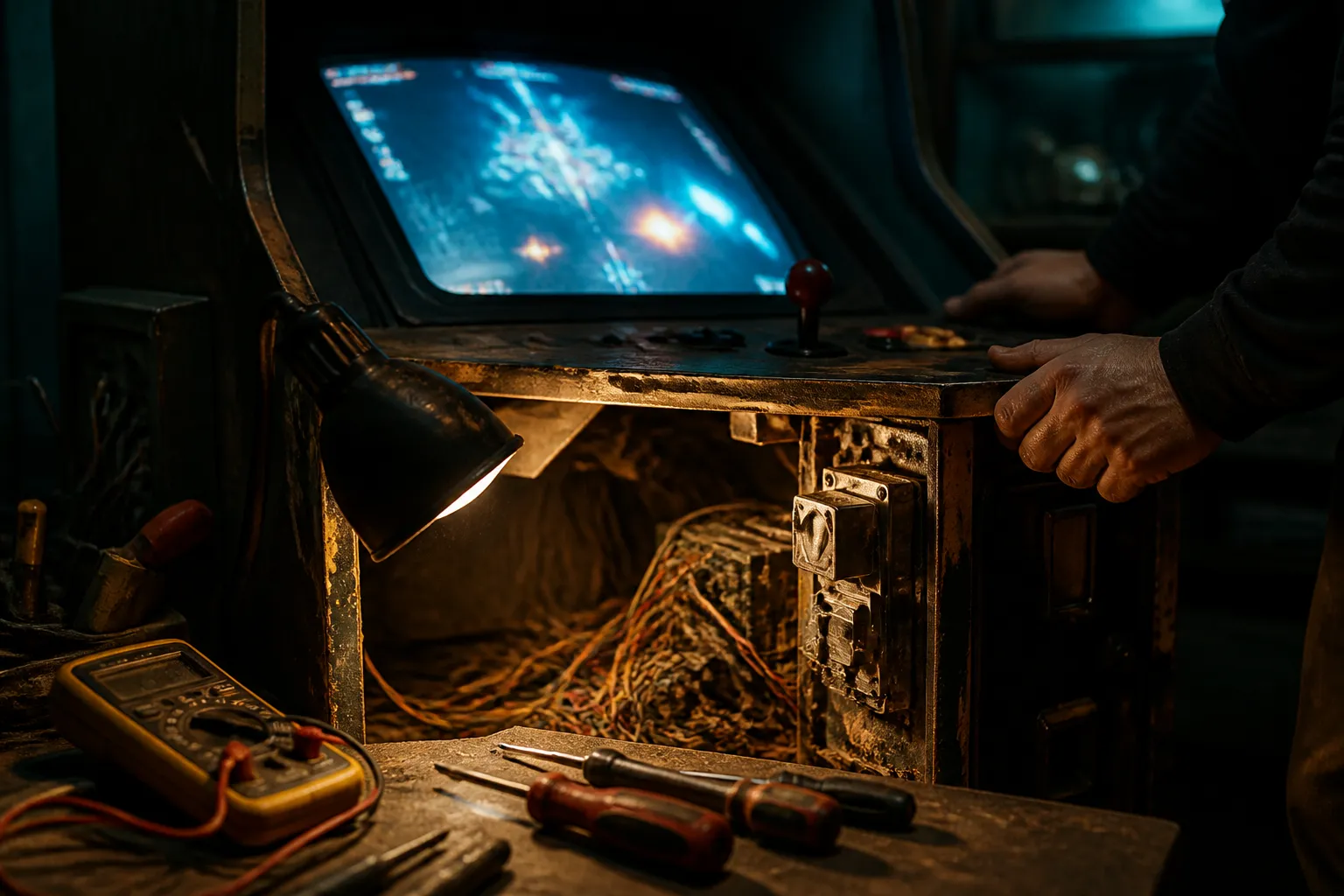
I spent twenty years behind cabinets with the back door off. I know what a coin door sounds like when the mech is worn. I do not have a source that explains why indie score attack games skip continues. So I will say that first, then reason from the floor and from the one review I could actually read.
What the Sources Do and Do Not Establish
The paper trail is thin. Of the eight sources on my bench, only one gave readable article text. That is a 2026 mxdwn Games review of Denshattack. It says nothing about continues.
The rest failed. The GDC 2019 PDF by Alex Jaffe came through as raw data. The Annalynn page, the permadeath analysis, the leaderboard piece, the Devil Daggers piece and the DOOM feedback loop piece gave me headlines and site navigation. One source was a notice about disabled JavaScript. I will not guess at what any of them say. A headline is not an argument.
So the claim in the title is my working argument, not a finding. Read it that way. Everything below is either from that one review or flagged as my own memory and reasoning.
The Arcade Logic Behind Dropping Continues
A score attack game wants one number. That number should mean something. A continue muddies it, because the total now includes a run that arguably should have ended ten minutes earlier.
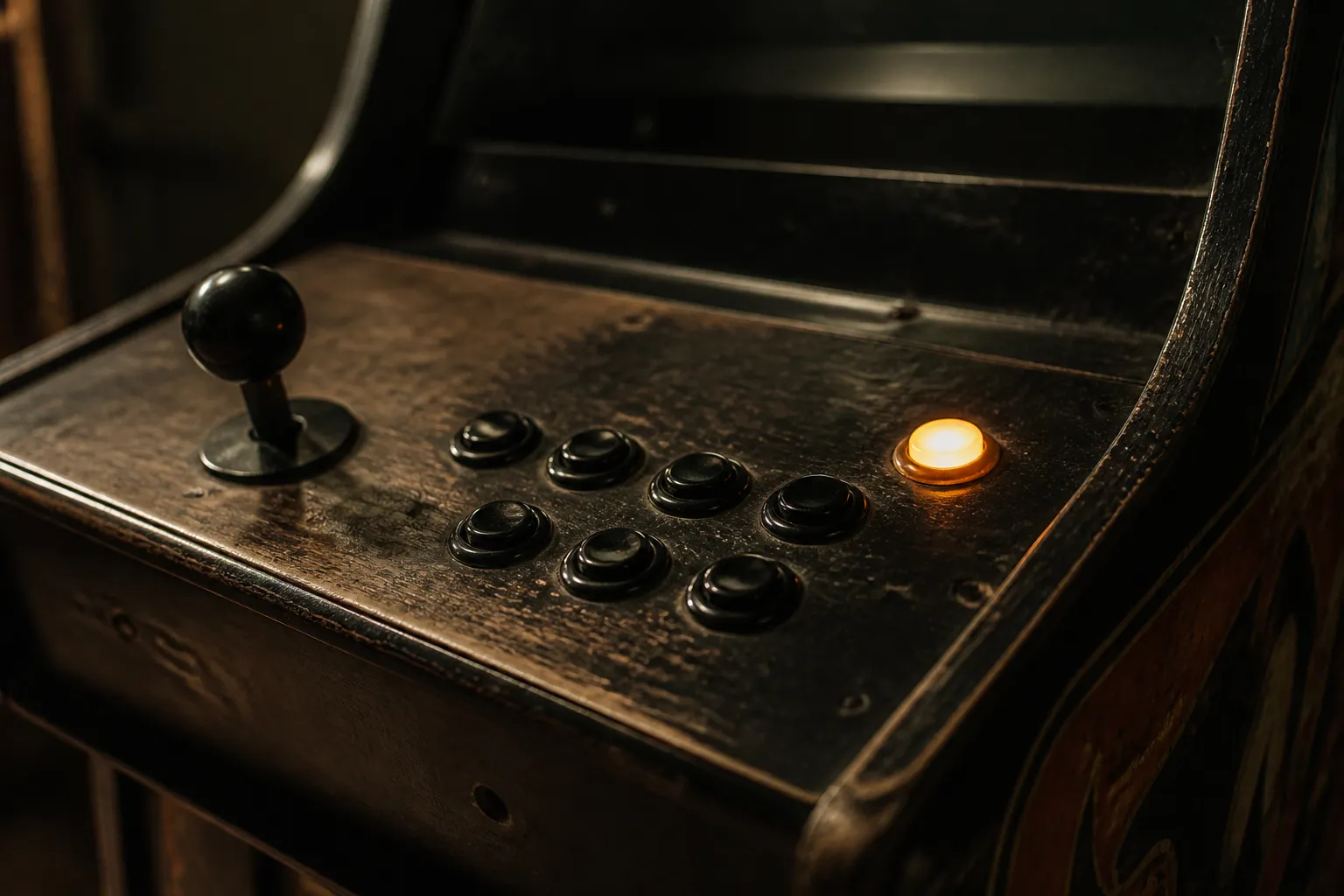
Coin-op cabinets worked on a similar principle, as I remember them. Die, and the machine wanted another coin. That was a fresh start, not a patch. I cannot point to a study on this. It is what the floor taught me, and memory is a weak witness.
A browser game has no coin slot, but it can offer the same clean restart. One click and the round begins again. The ritual may survive without the quarters, though I have no data on whether players feel that way.
What Denshattack Shows About Replay Pull
The one readable review gives a useful contrast. Denshattack is a trick-based arcade game where you control a train. The review says it pairs combo-driven scoring, like Tony Hawk's Pro Skater, with the style of Jet Set Radio. It comes from the Barcelona studio Undercoders.
The reviewer says success depends on flow. You chain tricks, hunt for alternate routes and make split-second calls as tracks branch. Many stages hide shortcuts or riskier paths, and those paths lead to higher scores and faster times.
That matters for my argument. The review says collectibles and ranking systems push players back into earlier levels to improve. So the pull to retry comes from the score and the ranking, not from a continue screen. The review does not say how Denshattack handles failure, lives or restarts. I will not claim it skips continues.
It also says the controls take time to master but stay responsive. Practice pays off in precision. That is the loop a score chaser wants: a short attempt, a clear result, and a reason to go again. The review adds that new mechanics arrive at a steady pace, and that boss battles and optional objectives change the formula.
Why the Approach Can Still Work, and Where It May Not
Here is the design case. A short run respects time. The round ends, the score appears and another try is a button press away. No save file, no menu tour.
Stakes stay readable too. When a failure is final, it counts. The player knows what happened.
Do players actually respond this way? None of my sources say. No developer or designer is quoted on retries, and nothing covers how players react to restarting after failure. I would call this a hypothesis worth testing.
The costs are plausible. No continues may raise the floor for new players. One early mistake could end a session that was going fine. Some players want to recover, not restart.
- Does the average run feel too short?
- Do players retry right after failing?
- Does the ranking board bring people back?
I would want developer interviews and real play data before saying more. My verdict is modest. The no-continue choice fits the score attack form. Whether it works for players is still open.
Sources
- https://vertexaisearch.cloud.google.com/grounding-api-redirect/AUZIYQHxwB8G9N7tHX0RnxKJU0RkFI02nV_aqpWDcQLpRtScGvSeFDcXG1KdR9g2EUGiQ0PNh4VEWhxyKI3tOkrZ6xGYxuiHZyXnLvEgU5j0-zRpt1pLLp2SUW4DaipTCG_U3GGj-lPqGIDAdOKcsdR-9gVeyifqWgDfHM4uFfsJPD9NOFchbJx3rkk=
- How Annalynn was inspired by the enduring appeal of Namco arcade games
- Analysis: The Game Design Lessons Of Permadeath
- Leaderboards - the original and best social feature ...
- The progressive retro style of Devil Daggers | PC Gamer
- Client Challenge
- DOOM Arcade Feedback Loops Analysis
- Denshattack Review - mxdwn Games

Marguerite Osei is a house writer for GamesUnlimited covering classic arcade cabinets, pinball, and the hardware that keeps them running. She spent two decades repairing machines in family arcades before she started writing about them. Her reviews weigh how a game plays against how well it holds up to a thousand quarters.